Sunday, June 14, 2026

Where the Soul of Thang Long Lives On in a Riverside Heritage Village

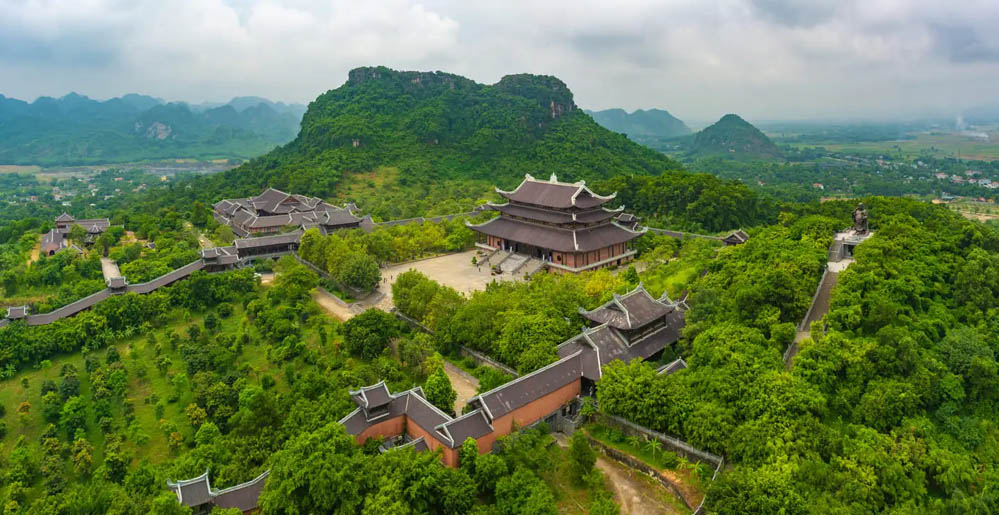
Tailor-made Vietnam tours - Located on the left bank of the Red River, the ancient village of Bac Bien (Bo De ward) preserves a part of the historical image of Thang Long - Hanoi. Amidst the pressures of urbanization and future planning, the challenge of preserving the ancestral spirit while developing sustainable livelihoods for the local people is finding a solution right from the explorations of international tourists. Awakening the potential of community tourism and transforming heritage values into drivers of development is a sensible approach, guiding this thousand-year-old village steadily forward.
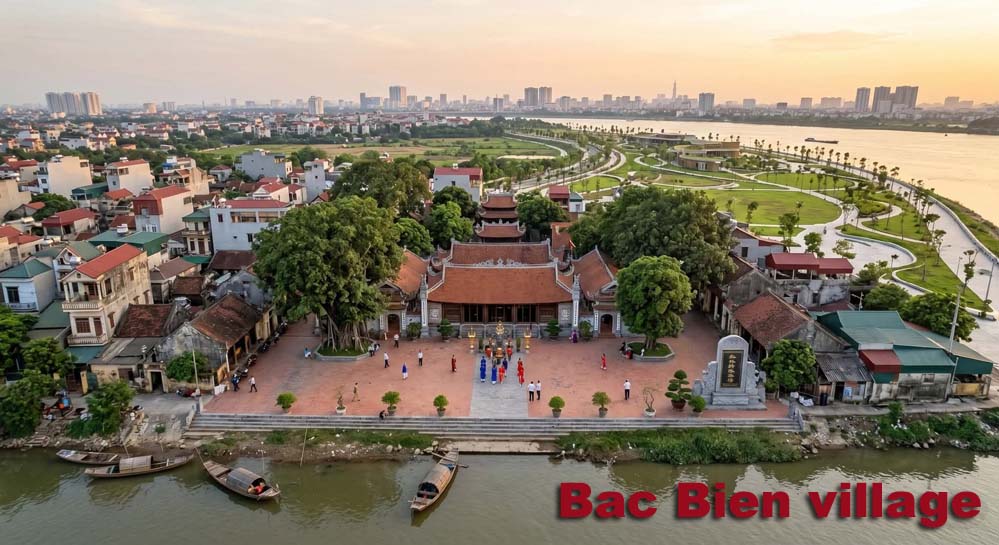

The "soul" of Thang Long in the riverside village.

If you take Hanoi's Old Quarter as your center, simply crossing the Chuong Duong or Long Bien bridges to the left bank will immediately reveal a space completely separate from the hustle and bustle of the city. This is the ancient village of Phuc Xa - Bac Bien, a strip of alluvial land shaped like a peaceful "green oasis" embracing the swirling red waters of the Red River.

For tourists , especially high-end international groups - those staying in 5-star hotels in Hanoi and always seeking authentic cultural experiences - Bac Bien Village is a surprising and captivating discovery right in the heart of the capital city.

In early June 2026, we had the opportunity to visit Bac Bien village, following a group of five family members from Iceland to fully experience the unique charm of this riverside land. The journey began early in the morning with a cycling tour around the village. Under the guidance of our tour guide, Dan Tran, the group leisurely cycled through the moss-covered Phuc Xa village gate, where ancient Chinese characters praise the land's auspiciousness and talented people.

Amidst the refreshing morning air, visitors from afar marveled at the fascinating contrast: on one side, the Red River flowed endlessly, its waters swirling with red silt; on the other, the ancient village with its exposed brick houses covered in lush green vines.

The most profound highlight was the visit to a typical family with four generations living together in the village. Stepping across the rustic stone steps, the group was greeted by the host with warm smiles and handshakes. In the solemn main hall, where the ancestral altar is solemnly adorned with fragrant incense, visitors were introduced to the tradition of ancestor worship - a moral bond and a core spiritual aspect of Vietnamese culture.

The father in the Icelandic tour group emotionally shared that, in his industrialized country, generations often live separately; witnessing a large, multi-generational family living together and preserving their family traditions, as in Bac Bien, was an incredibly meaningful and inspiring experience.

After the tour, the whole group gathered around a wooden table to enjoy warm green tea and plates of ripe, early-season lychees. The conversations flowed, from the history of An Xá village's founding during the reign of King Ly Thai To, the story of the resilient people clinging to the river and land through floods, to the similarities and differences in climate and lifestyle between the two countries.

Visitors can visit a typical family with four generations living together in the village, chat with them, and learn about the local culture.

Dan Tran shared: "Western tourists, especially family groups, absolutely dislike commercially-oriented, pre-arranged tourist attractions. What they seek is authentic interaction with the local people. They want to cycle through winding alleys, smell the smoke from cooking fires, see elderly people chewing betel nut on their porches, and hear stories about their family history. Bac Bien Village has plenty of those vibrant elements. The strong family structure and the natural hospitality of the people are the most luxurious tourism resources that no modern theme park can replicate."

The satisfaction of visitors is not simply a random, spontaneous phenomenon. From a management perspective, it is the inevitable result when the original values of the ancient village align with the strategic direction and policy framework that the Hanoi government has been striving to build over the past period.

An Icelandic tourist family poses for a commemorative photo with a four-generation extended family of local residents in front of their home.

To transform this thousand-year-old heritage into a driving force for sustainable economic development, it is first necessary to decipher the unique cultural, historical, and geographical resources that Bac Bien possesses. This is not just an ordinary agricultural area, but a core heritage region with a structure closely connected to the history of Thang Long - Hanoi.

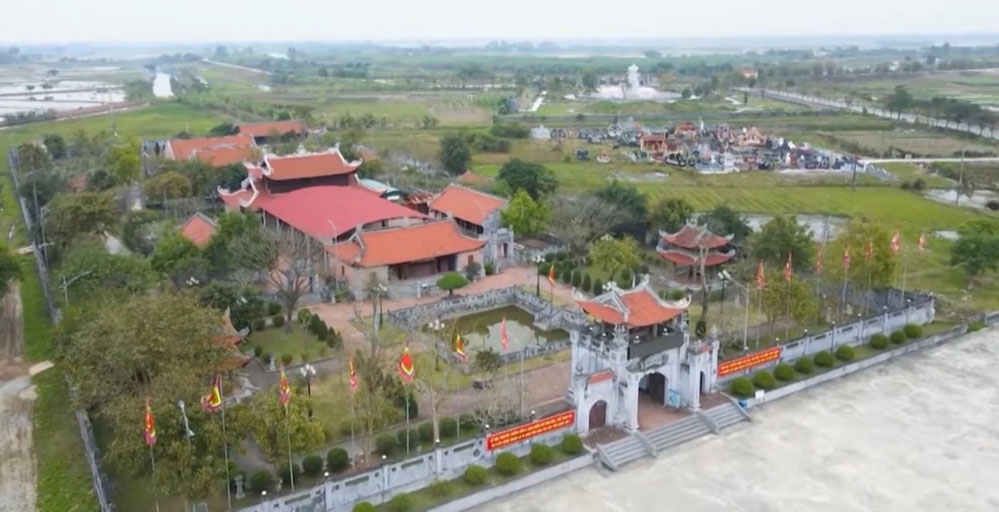
At the core of this resource system is a cluster of national-level historical and cultural relics including Phuc Xa communal house and Phuc Xa pagoda. The ancient Phuc Xa communal house is dedicated to the village's tutelary deities and the Grand Marshal Ly Thuong Kiet, the outstanding national hero who wrote the famous poem "Nam Quoc Son Ha" (Mountains and Rivers of the Southern Country).

Meanwhile, the tranquil Phuc Xa Pagoda houses the ancient An Xa Bronze Bell - a National Treasure recognized in early 2026, with the heritage of nine engraved feudal royal decrees. The vitality of Bac Bien also lies in its traditional festival held from the 6th to the 10th of March in the lunar calendar , featuring a unique water procession ritual on the Mother River, along with the Vietnamese Mother Goddess worship tradition, which has been recognized by UNESCO.

Assessing the inherent potential of the ancient village, Mr. Nguyen Ngoc Anh - Director of Phuong Nam Trading and Service Joint Stock Company - analyzed: "The greatest strength of Bac Bien village is its unique geographical location and the original nature of its ancient village landscape. Located less than 10 minutes from Hoan Kiem Lake, yet upon entering the village gate, visitors feel as if they have stepped into another world . The village's potential lies in exploiting its inherent values. The presence of the National Monument cluster, the story of the hero Ly Thuong Kiet, and the National Treasure An Xa ancient bell are the 'core brands' that will make Bac Bien a model destination for sustainable community tourism, creating fair competition with Duong Lam or Bat Trang".

Sharing the same viewpoint, from the perspective of a local resident directly involved in the profession, Mr. Mac Hung Cuong - a resident of Bac Bien village, currently working at a tourism company and in charge of a volunteer project on community tourism development in the area - shared:

"Through my work and practical experience in many countries such as Singapore, China, Japan, South Korea, France, Italy, etc., I have noticed that these countries have very effectively exploited villages with long histories, where communities have lived for generations. Models such as 'community tourism villages' and 'villages within cities' are very attractive to international tourists because they are places where local culture is preserved and presented in an authentic and vivid way."

Bac Bien village has all the favorable conditions for development in this direction. Besides the system of national-level historical temples and pagodas, and the An Xa ancient bell, a national treasure, the village also preserves the temple system dedicated to General Dao Ky, the Tam Phu Mother Goddess worship, and the presence of many long-standing families such as the Ngo, Nguyen Phu, and Le Dang families… Most notably, it proudly boasts being the birthplace of the outstanding national hero Ly Thuong Kiet.

Besides its rich cultural heritage, Bac Bien boasts a prime location along the Red River tourism axis, just over 2km from Hanoi's Old Quarter and about 1km from the historic Long Bien Bridge. This provides an ideal foundation for developing diverse tourism types, from community-based, cultural-historical, and spiritual tourism to traditional educational tourism , MICE tourism, and experiential accommodation right in the heart of the city. In the future, we hope to seek input and collaborate with local authorities, specialized agencies, and the community to research, propose, and jointly develop tourism in Bac Bien village, contributing to the preservation and promotion of the heritage values of Bo De ward in particular and Hanoi city in general.

The combination of glorious historical elements, ancient spiritual architecture, and the natural landscape of the riverside alluvial plain gives Bac Bien a solid foundation to confidently enter the heritage economy arena.

Awaken your inner self and your desire for a stable home.

The aspiration to build a heritage economy based on the principle of putting people at the center in Bac Bien is entirely achievable through a multi-tiered product axis, closely connecting intangible cultural heritage and natural ecology.

According to Mr. Nguyen Ngoc Anh, the first core product line is Culture - Spirituality combined with Traditional Education. This content axis transforms the cluster of ancient relics into a visual history learning space for the younger generation, while also opening the door to the captivating intangible heritage with the spirit medium rituals at the temples and shrines in the village. For international tourists, this is a powerful "magnet" thanks to the magnificent and authentic combination of mystical folk music, graceful sacred dances, and colorful costumes.

Continuing the spiritual aspect, the second product line focuses on livelihoods and direct income streams for households through experiential tourism. This service axis is designed as a closed loop: developing garden homestays to allow tourists to live at a slower pace outside the dike; implementing a "home meal" model where tourists can go to the market with the host, cook, and enjoy the abundant agricultural products of the alluvial plain; and finally, exploiting team-building programs and cycling to take advantage of the vast green space outside the Red River dike. This value chain is further expanded through spaces for interaction with nature and landscapes, village festivals associated with water-carrying rituals, and modern check-in points for young people such as art cafes and natural film studios harmoniously integrated with local architecture.

For this multi-tiered service chain to operate effectively, the roadmap for bringing ideas to life requires scientific preparation through specific steps. It begins with proactively seeking guidance and approval from local authorities to establish a solid legal framework for the pilot model. Next, the locality collaborates with travel experts and specialized units to develop a detailed operational plan and standardize service procedures before submitting the framework proposal to the competent authorities for approval.

The crucial step that will determine success or failure is the training of internal resources, providing skills in hospitality, service etiquette, and basic foreign language communication to the farmers and elders themselves, in order to preserve the authentic and hospitable local character. Finally, the ancient village will officially launch its practical implementation based on product groups that have strong inherent advantages.

"Within the broader development of the capital city, the community-based tourism model in Bac Bien is a quintessential piece, proving that a thousand-year-old heritage and a modern city can find common ground, a perfect blend to help the nation rise together," Mr. Anh emphasized.

Looking at the overall picture, the development of community-based tourism in Bac Bien ancient village is perfectly in harmony with the strategic vision of the Red River Landscape Boulevard Construction Project, aiming to transform the "Mother River" into a green space center of the capital in the new century. Developing community-based tourism is the golden key to resolving the dialectical relationship between conservation and development, between the interests of the State and the long-term livelihoods of the people, enabling the thousand-year-old heritage to break through and shine proudly in the new era.

Source: https://tailormadevietnamholidays.com/travel_news/breathing-new-life-into-bac-bien-through-culture-tourism.htm

Infrastructure and Innovation Drive Lao Cai Tourism to New Heights

Sapa Tours - In recent years, the Lao Cai tourism brand has gradually gained recognition on the national and international tourism map with its unique appeal and many outstanding destinations honored by prestigious international organizations.


To achieve the goal of making tourism a key and breakthrough economic sector by 2030, Lao Cai is stepping up efforts to attract investment and upgrade tourism infrastructure and technical facilities to exploit and develop new key tourism areas, destinations, and regions.

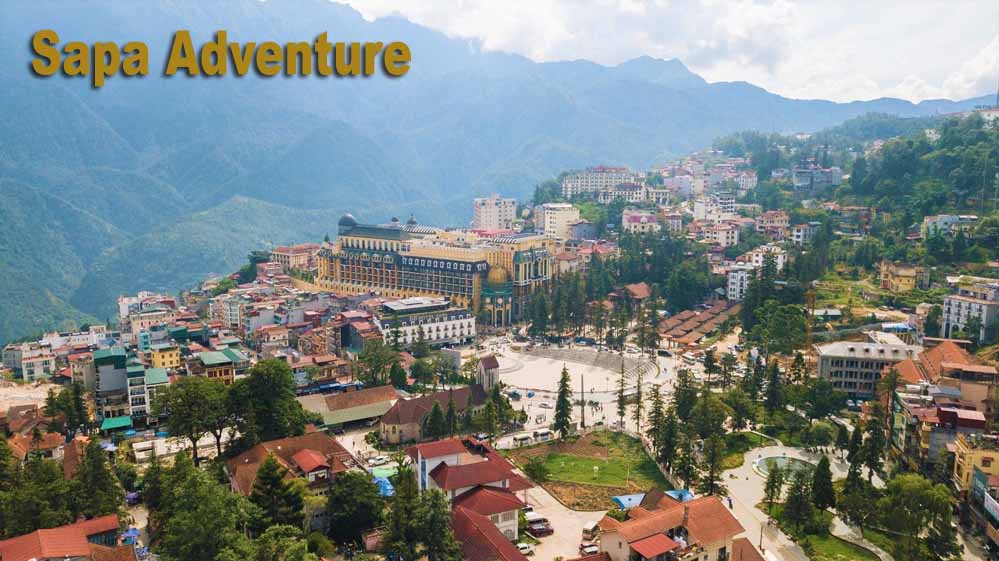
Sa Pa - a key growth engine.

With a rich history spanning over 120 years on the tourism map, Sa Pa is making a strong breakthrough to become a world-class tourism service center. Over the past 10 years (2016-2026), the growth of Sa Pa tourism has not just been a simple upward trend, but a complete transformation in status and revenue. While the milestone of nearly 1 million visitors in 2016 was considered a miracle, the figure for 2025 truly demonstrates Sa Pa's unlimited appeal. The number of visitors reached a record high of over 4.3 million - a 4-5 fold increase in a decade. Sa Pa's tourism revenue reached 19,000 billion VND, 11 times higher than a decade earlier.

The recognition and affection that domestic and international tourists have for Sa Pa largely stems from the effective application of the strategic thinking of "transforming heritage into assets," combined with trillions of dong invested in infrastructure, in the spirit of harmoniously combining majestic natural landscapes, world-class architecture, and local cultural values that are properly honored.

In the journey of transforming the face of Sa Pa, the role of strategic investors, including Sun World Fansipan Legend, cannot be overlooked. For many consecutive years, Sun World Fansipan Legend has been honored by the World Travel Awards (WTA) - an award dubbed the "Oscar of the world tourism industry  - with titles such as: "World’s Leading Cultural Destination", "World’s Leading Natural Scenic Destination", and "Asia’s Leading Destination".

Mr. Nguyen Anh Vu, Deputy Director of Fansipan Sa Pa Cable Car Tourism Service Co., Ltd. - Sun World Fansipan Sa Pa Branch, said: "Thanks to the consensus and close cooperation of the government, we have been able to realize iconic projects such as the Fansipan cable car - the first cable car in Vietnam to set two Guinness World Records, contributing to making Sa Pa one of the fastest-growing destinations in Asia."

Identifying tourism as a key economic sector, Lao Cai aims to welcome approximately 15 million tourists by 2030, contributing over 20% to the province's GRDP. In this plan, Sa Pa continues to play a core growth pole role with many key projects and initiatives being activated.

For example, the recent EcoSapa project, covering approximately 29.3 hectares with a total investment of over 2,400 billion VND, is being officially launched by Hong Phong Investment and Development Co., Ltd. and Ecopark Hai Duong Investment Joint Stock Company. The project aims to create a green living space that harmonizes with the natural hilly terrain, while preserving and integrating the distinctive landscape of the O Long tea hills and the local ecosystem into the overall development.

According to To Ngoc Lien, Secretary of the Party Committee of Sa Pa ward, the locality is determining the planning boundaries and mobilizing resources to invest in internal infrastructure connections; at the same time, it is proposing that the province call for large-scale projects with synchronized infrastructure to welcome large groups of tourists, serving the orientation of smart, sustainable and distinctive development.

Opening the way to unlock tourism potential.

Lao Cai aims for an average annual tourism growth rate of 20% by 2030; to welcome 15 million tourists; and to achieve total tourism revenue of 70,000 billion VND, contributing directly 17% to 20% of the province's GRDP. To achieve this goal, Lao Cai is promoting investment and upgrading tourism infrastructure and facilities.

Y Ty commune is poised for significant tourism development in the coming period as infrastructure bottlenecks in the area and surrounding regions are resolved. In early 2026, after a long wait, the project connecting Ban Xeo - Den Sang - Y Ty and the investment project to build the Y Ty tourism sub-area within the Sa Pa National Tourist Area were completed, much to the joy and excitement of the local people and tourists.

Ms. Nguyen Thi Tinh (a tourist from Phu Tho province) and her family chose Y Ty as their destination for sightseeing and relaxation during the recent April 30th holiday. Ms. Tinh said that she had heard the road to Y Ty was now beautifully paved, so she decided to choose it as her destination. "Now, the travel time from Lao Cai ward to Y Ty commune is only about 2 hours, making transportation faster and more convenient, and reducing fatigue for travelers."

During this year's April 30th - May 1st holiday, Y Ty commune still welcomed nearly 4,000 tourists, with an increased length of stay compared to previous years. According to the Chairman of the People's Committee of Y Ty commune, Nguyen Van Tai, Y Ty has great potential in agriculture and tourism. These are also two key areas in economic development and improving the lives of the people. However, difficulties in connecting transportation infrastructure have prevented these strengths from being fully exploited. "In the near future, Y Ty will invest in and upgrade the main village and inter-village roads connecting to this main road to create a complete transportation network," Mr. Nguyen Van Tai added.

Currently, Lao Cai has approximately 106 projects attracting investment for tourism development in the 2026-2030 period. Regarding transportation infrastructure, the province is focusing on mobilizing and attracting resources to invest in the construction of Sa Pa Airport, regional and inter-regional connecting roads, especially those connecting within the province's tourism development area. Lao Cai is investing in a road connecting the Noi Bai - Lao Cai expressway to the Y Ty tourist area; expanding the Noi Bai - Lao Cai expressway to ensure seamless connectivity from Hanoi to the Sa Pa tourist center; and linking Mu Cang Chai with Sa Pa, creating a unique "heritage route" connecting the two famous terraced rice fields, forming a closely connected network between Son La, Lai Chau, Tuyen Quang, and Lao Cai provinces via the Noi Bai - Lao Cai expressway.

Regarding tourism infrastructure, Lao Cai province prioritizes investment in building a synchronous and modern tourism infrastructure with strong linkages. This includes prioritizing the development of environmentally friendly hiking trails (mountain climbing, trekking), professional off-road racing tracks, and paragliding sites; constructing supporting tourism facilities along the routes, including scenic viewpoints, parking lots, signage systems, and standard restrooms; and upgrading transportation systems connecting tourist destinations, as well as providing clean water, electricity, and roads for community tourism sites.

Key projects and initiatives being activated in the locality promise to help improve the quality of services, expand development opportunities, and thereby solidify Lao Cai's position as a leading tourist destination both domestically and internationally.

Source: https://sapaadventure.com/traveller_reviews/lao-cai-unlocks-new-opportunities-for-tourism-expansion.html

Thursday, June 4, 2026

Quality over quantity the new logic of Ho Chi Minh city travel

Saigon Tours - The April 30th–May 1st holiday saw a large influx of visitors, but travel behavior has changed. In this context, Ho Chi Minh City is showing signs of shifting from a transit hub to an experiential destination, clearly reflecting the changing market.


After the April 30th - May 1st holiday in 2026, tourist numbers remained high, but the way Vietnamese people travel has changed. Instead of focusing on long trips or crowded destinations, many are opting for shorter trips, concentrating on specific experiences. This shift shows that the market is not only recovering in terms of quantity but is also changing its growth pattern.

The recent holiday period recorded over 12 million visitors nationwide, with many localities achieving significant revenue such as Ho Chi Minh City with approximately 8,700 billion VND and Da Nang with over 5,700 billion VND. However, the flow of tourists is no longer concentrated in a few specific times or destinations as before.

The fact that the two holidays are close together encourages tourists to proactively break down their plans and travel in multiple trips. Local authorities are also introducing new products, from night tours to eco-tourism experiences, helping to alleviate pressure on the city center.

The key takeaway lies in how travelers manage their time and budget. Instead of opting for long trips with packed itineraries, many people shorten their journeys but dedicate more time to each experience.

Slow travel models or short vacations are no longer experimental but have become a popular choice. This has led to a shift in destination selection criteria, with the experiential element becoming more important than the number of destinations.

This shift in behavior is closely linked to infrastructure and market operations. Increased flights, expanded highways, and the addition of waterway transport help shorten travel times. As time costs decrease, tourism is no longer confined to a single long vacation, but can be broken down into multiple trips throughout the year. Simultaneously, stimulus programs and flexible product offerings further reinforce this trend.

Within that overall picture, Ho Chi Minh City stands out as a clear example of market shifts. During the nine peak days, the city welcomed approximately 1.7 million visitors, including 190,000 international tourists, generating total revenue of around 8,700 billion VND.

What's noteworthy is not just the scale, but the way the city organizes its products. Instead of relying on its previous role as a transit hub, Ho Chi Minh City is shifting towards building an experiential ecosystem right in the heart of the city. A series of events such as the Tourism Festival, the Bread Festival, art programs, and fireworks displays have created reasons for tourists to stay longer.

Alongside this is the revitalization of traditional tours with a focus on specific themes. Programs such as heritage itineraries, river experiences, metro tours, classic car tours, or expansion to Can Gio and Cu Chi demonstrate efforts to extend tourism beyond the central area. The emergence of products like helicopter tours, cruises, and night tours also reflects a trend towards enhancing experiential value rather than simply increasing the number of destinations.

From a market perspective, Ho Chi Minh City is no longer just a place to "pass through," but is becoming a destination capable of retaining tourists with multi-layered experiences, from culture and cuisine to high-end services.

The shift towards "travel less but deeply" is creating a new growth logic for the entire industry. Businesses are no longer competing solely on the number of customers, but must increase the value of each experience. Shorter stays force accommodation providers, travel agencies, and destinations to optimize services within a short period, while also developing additional products to retain tourists.

In this context, the role of the destination is also changing. Resource advantages are no longer the sole determining factor; instead, the ability to design experiences and organize products has become the core competitive element. Localities that proactively innovate products, expand spaces, and connect infrastructure will have a distinct advantage in adapting to this trend.

What happened after the April 30th - May 1st holiday shows that Vietnamese tourism is entering a restructuring phase. Growth is no longer measured primarily by the number of visitors, but is gradually shifting towards the quality of experiences and spending levels. In this context, the question is not about how many more tourists to attract, but how the market will adapt to a tourism model that operates on many short trips but demands increasingly deeper experiences.

Source: https://saigontraveltour.com/sai-gon-travel-blog/beyond-a-transit-hub-how-ho-chi-minh-city-keeps-visitors-longer/

Quang Ninh tourism records strong growth across beaches and islands

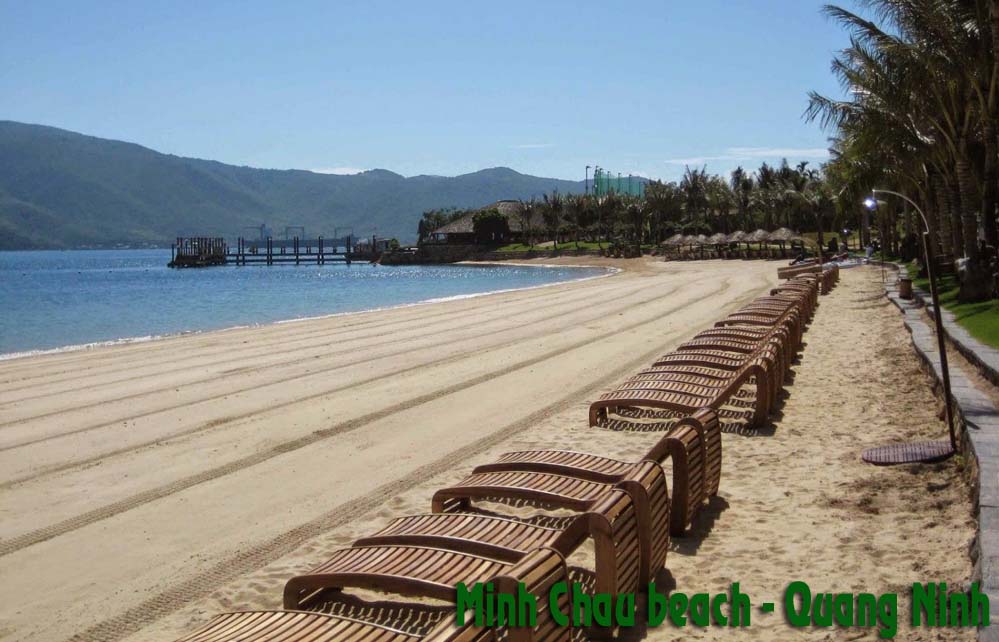
Halong cruise tours - During this year's April 30th - May 1st holiday, Quang Ninh's coastal and island tourism continued to "boom" with a high increase in visitors, especially on the islands of Co To, Quan Lan - Minh Chau... The proactive preparation of localities, service businesses, and relevant agencies contributed to providing tourists with exciting and attractive experiences.


During the three-day holiday, the number of visitors passing through Ao Tien High-Class Port to the islands of Co To, Quan Lan, and Minh Chau reached over 30,000, a significant increase compared to previous holidays. From early morning, the port area was bustling with activity; boats continuously departed, transporting tourists to various destinations. This demonstrates the increasing attractiveness and the growing trend of tourists returning to these island destinations. Co To, Quan Lan, and Minh Chau continue to impress with their pristine beauty, clear blue beaches, and peaceful atmosphere – factors increasingly favored in resort tourism.

On April 30 alone, the Van Don Special Economic Zone welcomed approximately 32,000 visitors for sightseeing and relaxation, with over 12,000 of them visiting the islands.

Besides the natural scenery, tourists particularly enjoy hands-on experiences such as strolling along the beach, cycling through pine forests, savoring fresh seafood, and participating in activities that reflect the local culture.

Ms. Hang from Hung Yen province said: "I have traveled to many places, but I still like to return to Quan Lan - Minh Chau because the sea is clean, the air is fresh, the services are becoming increasingly professional, and it still retains its pristine beauty".

Mr. Duc from Hai Phong also said: "Co To is now more convenient to travel to, has good services, reasonable prices, fresh air, and is not as crowded as some other tourist destinations. This is why I chose to bring my family there for the holiday".

The combination of pristine natural beauty and increasingly improved service quality is helping Quang Ninh's island routes become attractive destinations, not only during holidays but also maintaining a stable appeal throughout the summer tourist season.

To ensure convenience and safety for tourists traveling to and from the islands, weeks before the holiday, the port system, water transport units, and relevant agencies proactively developed appropriate operational plans and strategies, effectively utilizing existing infrastructure.

The Executive Director of Ao Tien High-Class Port said: "We have coordinated with relevant units to develop a reasonable ship regulation plan, increase manpower, arrange information counters, and scientifically manage traffic flow to ensure passengers move quickly and safely, preventing congestion".

Not only at the Ao Tien high-end port, but also at other ports and tourist destinations on the island, plans have been proactively implemented to welcome visitors, manage traffic flow, and deploy support forces. Security, environmental sanitation, and rescue operations are being carried out synchronously, contributing to building a safe and friendly tourism environment.

Ms. Ha from Hanoi said: "We were very impressed with the professionalism from the boat transportation to the services on the island. Everything was convenient, with no crowding or price gouging".

To meet the increased passenger demand, waterway transport companies have proactively increased trip frequency, conducted thorough vehicle inspections, and ensured sufficient life jackets and other safety measures before departure. A representative from Hoang Vy Transport and Tourism Company Limited stated: "The company has increased the number of daily trips and instructed crew members to strictly adhere to safety regulations, not to exceed the permitted passenger capacity, and to ensure the absolute safety of passengers throughout the journey"

Prior to the holiday, accommodation and food service establishments on the islands proactively prepared with sufficient facilities, personnel, and supplies. In the Quan Lan - Minh Chau area and the Co To special zone, many accommodations were fully booked early. Restaurants increased their stock of fresh seafood and essential goods to meet the high demand from tourists.

Ms. Trang, owner of Trang Dinh restaurant (Minh Chau Island), said: "We prepared our food supplies about a week before the holiday and increased our staff to ensure the best quality service for tourists"

One positive aspect of this year's tourism season is the public and transparent pricing displayed by service businesses. Local authorities have intensified inspections and supervision to prevent price gouging, contributing to building a civilized and friendly image for Quang Ninh tourism.

Ms. Nguyen, Deputy Head of the Culture and Social Affairs Department of Van Don Special Economic Zone, said: "Even before the Hung Kings Commemoration Day holiday, the locality proactively implemented plans to welcome domestic and international tourists. 100% of tourism businesses were required to publicly display prices and sell at the listed prices. Inter-agency inspection teams were maintained regularly throughout the holiday and the peak summer tourist season".

In addition, food safety and hygiene are given special attention. Inter-agency inspection teams are increasing surprise inspections at restaurants and food processing and trading establishments, promptly detecting and correcting violations, contributing to ensuring the rights and health of tourists.

The vibrant activity of Quang Ninh's coastal and island tourism during the April 30th - May 1st holiday not only reflects the growing appeal of these destinations but also demonstrates the effectiveness of management, organization, and service quality improvement. With comprehensive and systematic preparation, Quang Ninh continues to affirm its position as a leading coastal and island tourism destination in Northern Vietnam, contributing to economic growth and promoting the local image to domestic and international tourists.

Source: https://halong-tour.com/travelnews/summer-season-promises-strong-tourism-of-quang-ninh.php

Thursday, April 23, 2026

Heritage bays merge into tourism powerhouse

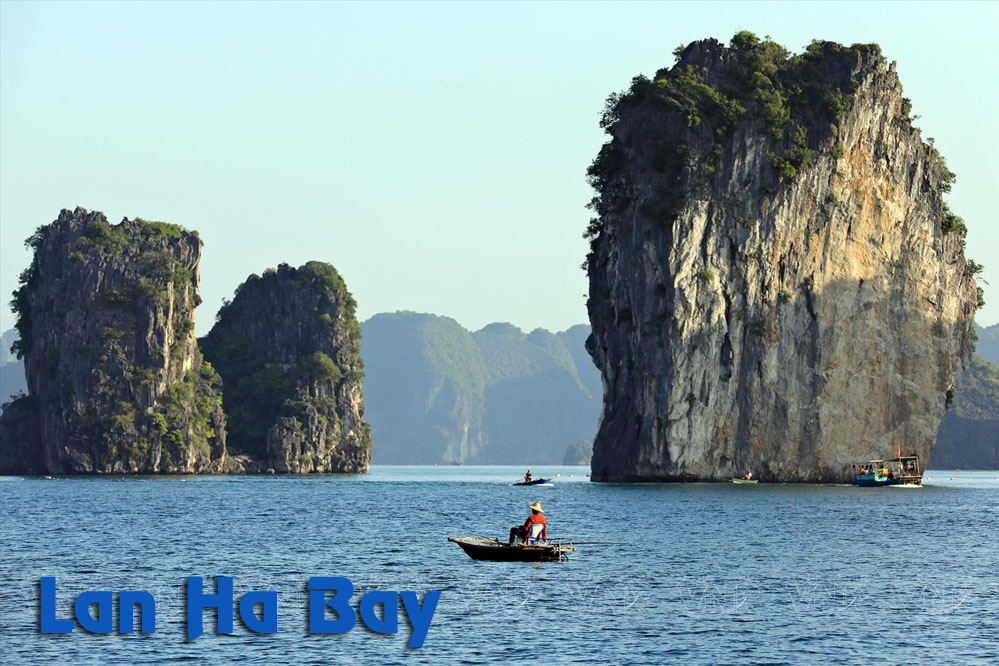
Cruise Lan Ha Bay - Quang Ninh and Hai Phong have signed a Coordination Regulation on managing the operation of inland waterway vessels transporting tourists in Halong Bay and Lan Ha Bay, effective from April 1, 2026, opening a new chapter in spatial linkage and the organization of marine tourism development.

An administrative decision, but one that opens up a new development structure where heritage values are placed within an interconnected whole rather than as disconnected "pieces".

According to the Halong Bay - Yen Tu World Heritage Management Board, as soon as the regulations come into effect, it is expected that an additional 5,000 to 6,000 tourists and more than 50 overnight cruise ships will travel from Lan Ha Bay to Halong Bay each day.

This new influx of tourists is not simply an increase in quantity, but a qualitative shift in the structure of destination development.

According to the Quang Ninh Provincial People's Committee, emphasized that the regulations on coordinating the management of tourist boat operations on the Halong Bay - Lan Ha Bay route will open up enormous development potential for tourism in both localities, contributing to increasing the number of tourists and enhancing the value of heritage exploitation for Quang Ninh province.

The requirements are simultaneously very clear: standardization of standards, ensuring absolute safety, and strict compliance with Circular No. 66 dated December 31, 2025, of the Ministry of Construction on technical and environmental requirements for tourist accommodation vessels, floating restaurants, and floating hotels.

Border guards, waterway police, and port authorities are tasked with both facilitating operations and tightening management to ensure security, order, and a healthy business environment.

An interconnected operating mechanism was established, in which licensing, regulation, and control of ship traffic between the two bays became a crucial link.

This regulation, therefore, goes beyond the technical realm. It opens up a space of interconnected heritage, where administrative boundaries gradually give way to a regional development mindset.

In the first quarter of 2026, Quang Ninh's tourism sector achieved revenue of 15,687 billion VND. This figure reflects the effectiveness of the strategy of product innovation, service quality improvement, and enhanced promotion over the past period. The opening of the two bays came at the right time, as the beach tourism season began, acting as a new impetus for growth.

The official permission to connect Halong Bay and Lan Ha Bay is not just a change in travel routes, but a significant shift in development thinking, from managing geographical boundaries to managing inter-regional heritage spaces.

For many years, the two geographically adjacent bays, both part of the Gulf of Tonkin ecosystem, operated as two separate destinations. As a result, the visitor experience was fragmented, while the overall value of the heritage remained largely untapped.

The connections that have been opened have formed a continuous experiential corridor: Halong Bay stands out with its magnificent cave system and unique geological and geomorphological values; Lan Ha Bay offers ecological spaces, beaches, Cat Ba forest, and distinctive fishing villages.

These two value structures, when placed side by side, form a "complete picture" of Vietnam's multi-layered maritime heritage, rich in rhythm and capable of telling a more coherent story to visitors.

One of the long-standing "bottlenecks" of bay tourism lies in the short length of stay, repetitive itineraries, and lack of depth in the experience.

The opening of the route has fundamentally changed this. Tourists can explore 2-3 bays in the same trip; 2-3 day tours have become more flexible and less repetitive; activities such as kayaking, swimming, cave exploration, and fishing village experiences are more rationally distributed.

The benefits extend beyond mere experience. Longer stays mean increased spending, especially in the high-end segment, the target market for Vietnamese tourism in the coming period.

For travel and cruise businesses, this is a policy that has been awaited for many years. The opening of new routes brings clear benefits because it optimizes itineraries, reduces operating costs (no need to return to old routes); increases ship operating capacity; and makes it easier to design new products and upgrade the experience.

From here, high-end product lines have the conditions to develop: multi-day boutique cruises, heritage and eco-tourism itineraries, or the "multi-bay cruise" model, a popular trend worldwide.

An inter-regional tourism corridor can only truly operate effectively when there is a compatible governance mechanism. According to Mr. Pham Ha, three systemic bottlenecks need to be addressed:

Firstly, the current inter-regional ticketing and fee mechanisms are still separated by locality, easily leading to overlaps and increased costs.

Secondly, regulations regarding overnight stays and anchorage points need to be more flexible, allowing itineraries to be designed according to market demand rather than being constrained by administrative boundaries.

Third, standardize service standards. An interregional journey requires consistency in everything from safety and environment to the quality of the experience. Without this consistency, added value will be difficult to create clearly.

In the long term, connecting Halong Bay and Lan Ha Bay can be seen as the starting point for a larger structure: the interconnected Halong - Lan Ha - Bai Tu Long marine heritage complex.

Such a space, if properly planned and managed, has the potential to become a leading attractive marine and island tourism cluster in Asia, a foundation for the development of the luxury yachting industry, and a model for balancing exploitation and heritage preservation.

The opening of the two bays, therefore, goes beyond simply creating new tourist routes. It opens up a new perspective on heritage as a vibrant whole, capable of connecting, complementing, and supporting each other.

With the right mechanisms and effective governance, this will be a crucial boost for Vietnam's coastal tourism to break through and move closer to the goal of becoming a world-class destination.

Source: https://cruiselanhabay.com/news/spatial-linkage-transforms-halong-and-lan-ha-tourism/

Australia chooses Vietnam over costly Europe

Cheap Vietnam Tours - Vietnam entered the list of the top 10 most searched destinations for the first time in March 2026, demonstrating its growing attractiveness on the international stage.


According to the Australian travel website Escape, amidst volatile global travel trends, Vietnam is emerging as a top destination for Australian tourists in 2026, expected to dethrone traditional, increasingly expensive European destinations.

Escape's travel experts believe that amidst the complex geopolitical situation in the Middle East and escalating travel costs in Europe, Asia in general and Vietnam in particular are emerging as ideal, safe, accessible, and budget-friendly destinations, offering a perfect blend of natural beauty, cultural values, exciting experiences, and delicious cuisine. The availability of direct flights with a flight time of less than 10 hours is a significant competitive advantage that helps Vietnam attract tourists from Australia.

According to the latest report from the online travel platform Travel Agent Finder, Vietnam has entered the list of the top 10 most searched destinations for the first time in March 2026, demonstrating Vietnam's increasing attractiveness internationally and its predicted status as a major tourist destination in 2026.

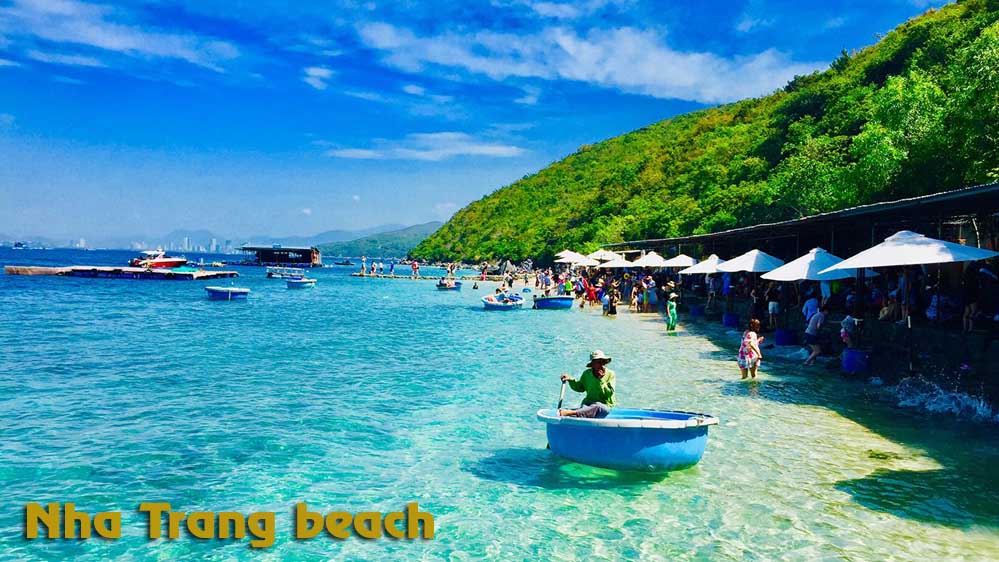
Notably, the Expedia platform also recorded a surge in demand with impressive growth in Vietnam's coastal cities. Nha Trang (Khanh Hoa) and Da Nang led the list of trending destinations in Asia, with accommodation search traffic skyrocketing by 65% year-on-year. Following closely behind was Phu Quoc Island with a 45% increase, surpassing popular coastal destinations in Indonesia and Thailand.

Sarah King, a representative from Expedia, stated: "Nha Trang is considered by international travelers as Vietnam’s ‘beach resort capital’ thanks to its long coastline, year-round sunny climate, and relaxed atmosphere." These are the excellent qualities that Australian travelers previously sought in the Mediterranean region.

Besides its tourism resources, the cost factor and the diversity of cultural and culinary experiences also play a significant role in enhancing Vietnam's competitiveness. Tourists can easily experience unique cuisine at affordable prices, while transportation and accommodation costs are also very reasonable compared to many other international destinations.

Currently, air connections between the two countries are very convenient. Tourists from major Australian cities such as Sydney, Melbourne, Brisbane, and Perth can easily fly directly to major Vietnamese cities like Hanoi and Ho Chi Minh City via airlines such as Vietnam Airlines, Qantas, and VietJet Air, opening up strong growth opportunities for Vietnamese tourism in 2026 and beyond.

Meanwhile, Singapore's The Strait Times also noted that Vietnam is becoming one of the top destinations in Southeast Asia, evidenced by the strong interest on social media platforms, as well as the significant growth of the tourism industry in recent years.

Currently, Vietnam attracts international tourists thanks to its combination of rich history, diverse natural landscapes, and reasonable costs. Street culture, cuisine, and affordable health and beauty services are increasingly attracting young travelers from countries in the region.

Simultaneously, many international hotel groups have been expanding their operations in Vietnam. Businesses in the accommodation sector believe that Vietnam possesses a combination of high tourism demand, an improving standard of living, and increasingly convenient connectivity.

In addition, large-scale projects continue to be implemented to enhance the capacity to serve tourists. Many international corporations are collaborating to develop resorts and hotels in key destinations such as Phu Quoc and Vung Tau, contributing to expanding the supply of rooms in the coming years.

In regions with scenic advantages such as the North and Central Vietnam, the trend of wellness tourism is also growing, with the participation of international hotel brands such as Melia Hotels International and Hilton Hotels & Resorts. This demand is fueled by improved air connectivity, with many new routes being opened, increasing accessibility for international tourists.

According to data from the Vietnam National Tourism Administration, Vietnam's tourism revenue has increased rapidly over several decades, from VND 1.34 billion in 1990 to VND 355 trillion in 2010 and is projected to reach approximately VND 840 trillion in 2024. Following the COVID-19 pandemic, Vietnam has also emerged as the fastest-recovering tourism market in Southeast Asia, with international visitor numbers reaching approximately 98% of pre-pandemic levels in 2019.

Vietnam recorded its highest tourism growth in the first quarter of 2026 with 6.76 million international visitors, a 12.4% increase compared to the same period last year. Key markets such as China, South Korea, and Taiwan (China) continued to be the main drivers of demand.

Source: https://cheapvietnamtour.com/news/vietnam-emerges-as-budget-paradise-for-aussie-visitors.php

Tuesday, April 21, 2026

Building a strong tourism brand for Dong Nai

Package Vietnam Tours - In the first quarter of 2026, Dong Nai province welcomed approximately 1.55 million tourists, generating nearly 1.16 trillion VND in tourism service revenue. In the second quarter, tourist areas and attractions in the province are hoping that the Hung Kings Commemoration Day, the anniversary of the liberation of the South and reunification of the country (April 30th), and International Labor Day (May 1st) will attract a large number of people from within and outside the province for recreation and entertainment. The province's tourist areas and attractions have already prepared programs to welcome visitors.


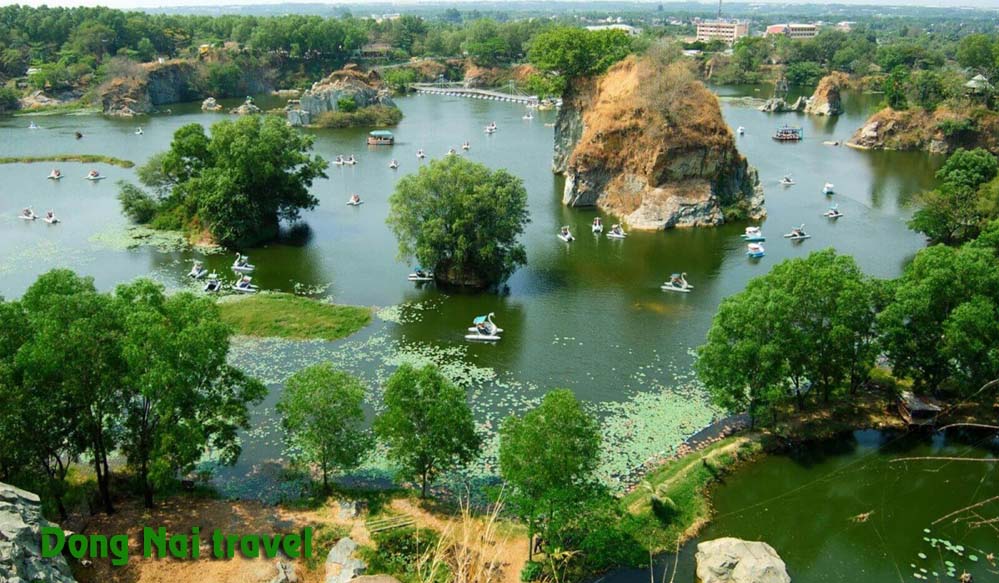
Dong Nai boasts many attractive destinations for tourists to choose from, such as Cat Tien National Park, Bu Gia Map National Park, Tri An Lake, Cau Dau Lake, Suoi Mo Stream, Buu Long Tourist Area, Bo Cap Vang (Golden Scorpion) Cave, Giang Dien Waterfall, Bom Bo Squirrel Cave, etc. In addition, tourists can also choose to go on eco-tourism trips to orchards in communes and wards such as Long Khanh, Bao Vinh, Xuan Loc, Tan Phu, etc., to enjoy various fruits and experience the fresh air.

According to forecasts, during the holidays at the end of April and beginning of May 2026, many families will choose to travel to nearby destinations. This presents an opportunity for tourist areas and attractions in Dong Nai to attract more visitors for recreation and entertainment. However, for a long time, tourists visiting Dong Nai have mainly been day-trips with low spending, averaging around 750,000 VND per person. Therefore, while the number of visitors to the province is high, revenue remains low. To increase tourism revenue, tourism products and accompanying services must be attractive enough to entice tourists to spend money on them.

In recent years, the province has made noteworthy strides in shaping eco-tourism and resort products associated with forests, lakes, rivers, waterfalls, and gardens. Several businesses have also boldly invested in resorts and nature experiences in a "green" and sustainable direction. However, overall, tourism in Dong Nai is still largely in its potential stage; tourism products lack distinctive features, services are not yet synchronized, and the length of stay for tourists remains short.

In the context of the increasing demand for experiential tourism and nature-based experiences, this is a significant advantage for Dong Nai compared to many other localities in the region. However, this advantage can only be truly realized through systematic planning and focused investment. Destinations need to be linked to form a value chain capable of retaining tourists. If each tourist visiting Dong Nai spends only about 1 million VND per person, the province could generate over 1 trillion VND in additional revenue annually.

Currently, tourism infrastructure has not kept pace with demand, and transportation connections to some destinations remain limited; accompanying services such as high-quality accommodation, distinctive cuisine, and souvenirs have not developed proportionally. To accelerate tourism growth, a clear development strategy is needed, identifying the right key products. For Dong Nai, this should focus on eco-tourism, resort-style tourism, and experiential tourism linked to forests, rivers, lakes, and waterfalls, combined with agricultural tourism and local culture. Once the direction is determined, attracting investment also needs to be selective, prioritizing capable investors with a long-term vision, avoiding fragmented development that disrupts the landscape.

Furthermore, the province needs to simplify and shorten administrative procedures, create clean land funds, and connect convenient transportation infrastructure so that businesses can confidently invest quickly in tourism projects and products. At the same time, the province should focus on building the Dong Nai tourism brand to create a strong impression on the national tourism map. In addition, to accelerate tourism development, the province needs to train tourism human resources. Strengthening communication and promotion, linked with large-scale cultural and sports events , will help enhance recognition and attract tourists.

Source: https://packagevietnamtours.com/vietnam_news/enhancing-services-to-increase-tourism-revenue-in-dong-nai.asp

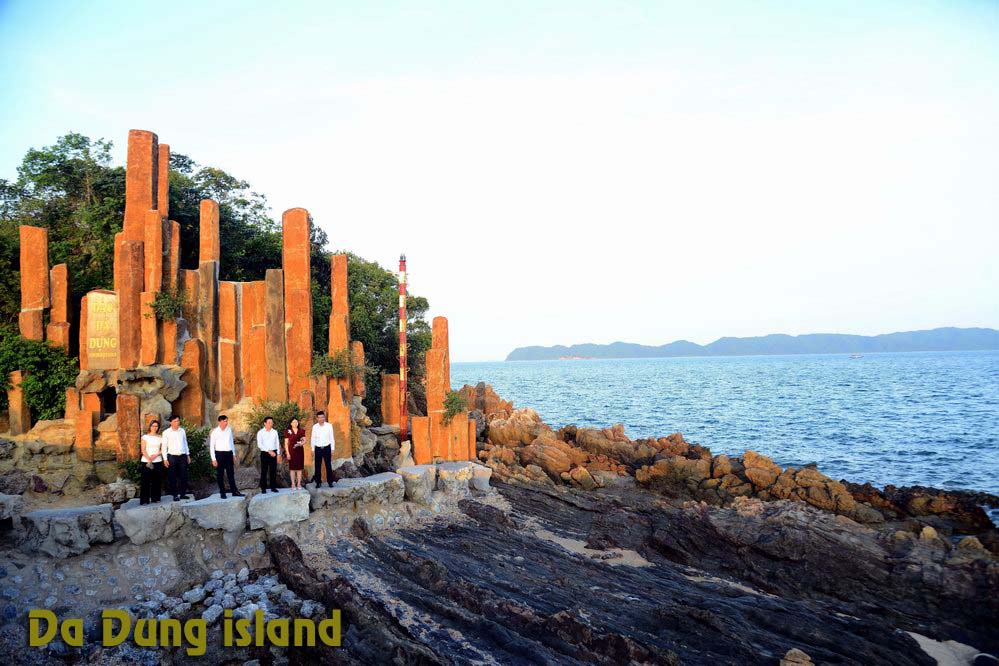
Da Dung island emerging as ecotourism destination

Bai Tu Long Bay cruise - Nestled within the Bai Tu Long Bay complex, Da Dung Island, located in Dam Ha commune (Quang Ninh province), stands out with its towering limestone formations, diverse marine ecosystem, pristine mangrove forests, and long stretches of white sandy beaches.


Bai Tu Long Bay currently boasts over 600 islands, with Da Dung Island being one of the highlights of this coastal region. Located approximately 12km northeast of Dam Ha commune (formerly Dam Ha district), the island covers an area of about 63.3 hectares, encompassing rocky mountains, earthen hills, and pristine forests. Its crescent-shaped beach, nearly 800m long, is an ideal spot for visitors to immerse themselves in the fresh, unspoiled nature.

The rich marine and forest ecosystem, clear blue seawater, and tranquil landscape offer rare value for the development of high-end resort tourism, linked with exploration and conservation.

With the goal of diversifying and developing ecotourism and introducing high-quality tourism products in Bai Tu Long Bay, Quang Ninh province has recently realized this by announcing tour itineraries in Bai Tu Long Bay and itineraries connecting Ha Long Bay and Bai Tu Long Bay; organizing workshops on tourism development in the bay; and introducing high-quality cruise ships to welcome tourists to experience services in the bay.

In June 2025, the People's Committee of Quang Ninh province officially announced Da Dung Island (Dam Ha) as a provincial-level tourist destination. This event contributes to increasing the number of high-quality eco-tourism and resort products, giving tourists more options when visiting Quang Ninh. The area has suitable infrastructure for relaxation, experiential tourism, and organizing events and weddings, catering to high-spending tourists.

This tourism product is oriented towards developing a model for the high-end customer segment. It has the potential to become an ideal destination for those seeking pristine nature and high-quality resort experiences. All development must prioritize the preservation of ecological values, environmental protection, and a harmonious integration of infrastructure and nature.

Da Dung Island is part of Quang Ninh province's regional tourism development plan. Connecting tourist routes from Ao Tien to Da Dung, or from Da Dung to neighboring islands, will create an attractive tourism chain, maximizing the potential already planned by the province. This is a long-term approach that will help exploit natural advantages and create unique tourism products for Quang Ninh.

The recognition of Da Dung Island as a provincial-level ecotourism destination by the Quang Ninh Provincial People's Committee is not only an honor and source of pride for the Party Committee, government, and people of the former Dam Ha district, but also an acknowledgment from all levels and sectors of Quang Ninh province of the beautiful natural landscape, clean climate, and ecological and tourism value of Da Dung Island.

Besides its natural advantages, the Da Dung Island tourist destination also needs improved transportation links and a well-known route map to facilitate visitor access. Furthermore, due to its isolation, the island currently lacks access to the national power grid, has an unstable telecommunications network, and only has a limited supply of fresh water. If it were to accommodate a constant influx of tourists and operate at full capacity, it would face difficulties.

According to the investor of the tourist area on Da Dung Island, tourism products on the island include relaxation, experiential tourism such as being a fisherman, squid fishing... The company is collaborating with neighboring fishing villages, connecting tourist routes to open a center for displaying OCOP products, creating opportunities for economic development for local people.

Along with Co To Island, Ngoc Vung Island, Quan Lan Island..., Da Dung Island is expected to add unique marine ecotourism products and serve as a new model for exploiting the marine economy while preserving the environment, contributing to making Dam Ha a new destination on Quang Ninh's tourism map.

Source: https://baitulongtours.com/news/da-dung-island-adds-value-to-bai-tu-long-bay.asp

Tuesday, March 3, 2026

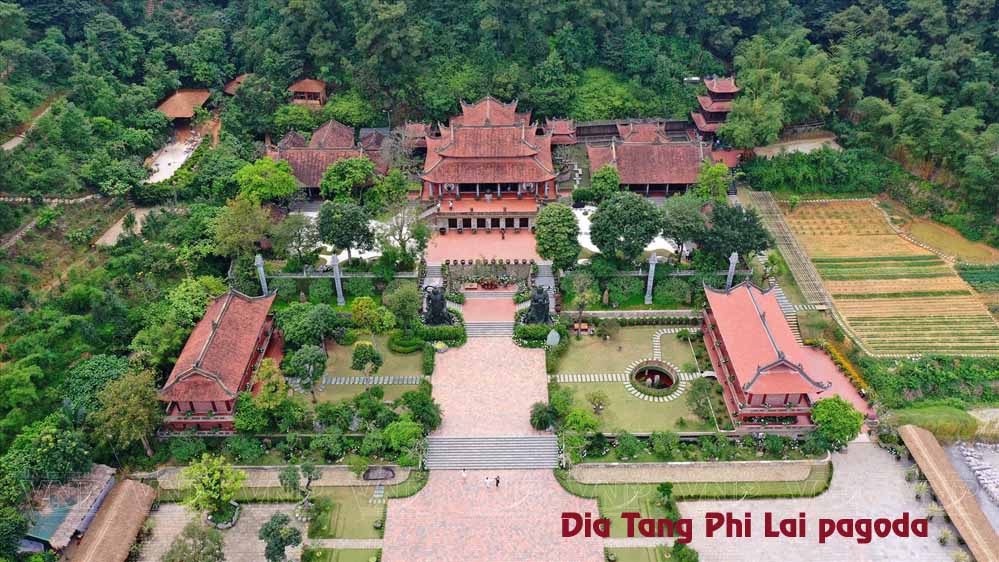
Dia Tang pagoda where nature meets spirituality

Tailor-made Vietnam tours - Ha Nam, a low-lying area at the southern gateway to Hanoi capital city, boasts a pleasant climate and abundant natural beauty. Not only famous for its long-standing cultural heritage, Ha Nam is also frequently mentioned for its spiritual system, with four renowned temples: Tam Chuc, Ba Danh, Phat Quang, and Dia Tang Phi Lai. Seemingly forgotten by time, the Dia Tang temple has now donned a new look, attracting numerous visitors from all over to worship and admire the scenery. The serene atmosphere at the temple, the peaceful and simple beauty, brings a sense of peace to the heart, as if untouched by worldly concerns.


Dia Tang Phi Lai pagoda, also known colloquially as Dung Pagoda, derives its name from the ancient name Dung of Ninh Trung village in Liêm Son commune, Thanh Liem district, Ha Nam province. Locals still recount that the pagoda was built in the 11th century with over 100 rooms. In the past, King Tran Nghe Tong chose the pagoda as his retreat, and King Tu Duc also visited it to pray for a son.

To date, the temple is nearly a thousand years old, gradually deteriorating and wearing down over time. It wasn't until the end of 2015 that Venerable Thich Minh Quang took over, renovated it, and renamed it Dia Tang Phi Lai Tu (Ksitigarbha Bodhisattva), implying that Bodhisattva Ksitigarbha came to this place, attained Buddhahood, and will not return. The ancient temple is situated on a hill overlooking vast rice fields, with its back against a pine forest, surrounded by nature on all four sides. Perhaps this is part of the reason why the temple was abandoned for a long time, remaining isolated and overgrown before being renovated and becoming known to tourists today.

How to get there

Dia Tang Phi Lai pagoda in Ha Nam is located 16km from Phu Ly city, the center of Ha Nam province, and 72.5km from Hanoi, a 1 hour and 21 minute drive south. Therefore, I suggest two convenient routes for both cars and motorbikes as follows:

Getting to Dia Tang Phi Lai Pagoda by car: Starting from Hanoi, take the Cau Gie - Ninh Binh expressway to Phu Ly, Ha Nam via National Highway 1A. From there, drive straight for another 12km to reach the pagoda; the journey takes about 1.5 hours. 

To get to Dia Tang Phi Lai Pagoda by motorbike: Hanoi -> Nuoc Ngam Bus Station -> drive straight on the old National Highway 1A -> Van Dien -> Thuong Tin -> Van Diem Train Station -> Phu Xuyen -> Cau Gie -> Phu Ly city towards Provincial Road 495 to reach the pagoda -> Dia Tang Pagoda.

Dia Tang Phi Lai Pagoda is a surprisingly harmonious blend of structures and nature. Behind it lies a forest, beside it a small, calm pond, and within the temple grounds are flowers and trees commonly planted in sacred spaces. Not ancient and moss-covered, the temple, with its deep brown hue, evokes a sense of serenity and transcendence in this earthly realm. Free from noise and dust, far from the hustle and bustle of the city, devotees and travelers alike have the opportunity to find peace, immersing themselves in nature and the beauty of the landscape. All that remains is the scent of incense carried on the breeze, the sound of the temple bells, and the rhythmic chanting of prayers, all of which bring a sense of inner peace. 

The Sea of Suffering and the Twelve Circles: Passing through the gate into the temple courtyard, visitors will be surprised by the pristine white expanse before their eyes. Instead of the red brick paving found in most temples, the ground at Dia Tang Temple is covered ith white pebbles. Beside the courtyard stands a sign that reads "Sea of Suffering". Twelve circles drawn on the pebbles in front of the main hall symbolize the twelve links of dependent origination, with the pebbles representing meditation. All of this is evidence of and closely connected to Buddhism.

The temple complex: Like most temples and pagodas in the Northern Delta region, Dia Tang Pagoda is built in the traditional column and gable roof style, with intricately carved details. The main hall (Tam Bao) is the largest structure in the temple, dedicated to the Bodhisattva Ksitigarbha. To the right is the Ancestral Hall, where the 42 founding abbots of the pagoda are worshipped. Next to it are a small shrine dedicated to the Bodhisattva Avalokiteshvara, the Venerable Master, and the Holy Sages; living quarters for monks, nuns, and lay Buddhists; a lecture hall for daily sermons by the abbot and for meditation retreats; and finally, a guesthouse for visitors and those participating in retreats and other experiences at the pagoda. 

Admire the artifacts of the Ly-Tran dynasties: The pagoda currently preserves nearly 100 earthenware, porcelain, and terracotta artifacts with diverse colors and patterns, identified as artifacts from the Tran dynasty, with a few patterns from the Ly and Le dynasties. Among them are many types of bricks and tiles carved with lotus flower, dragon, and phoenix motifs, along with two sets of mythical creatures recreating historical events from the Ly-Tran dynasties. 

The path to the mountaintop: conquering the temple's peaks along the stream requires great perseverance from the traveler. Sections are climbed using ropes, others involve crouching and crawling through caves, and there are nearly 20 rest stops along the way. The meditation gardens are paved with white stones or covered in green grass, offering spaces for enjoying tea, relaxing in hammocks, or sitting on benches to admire the temple from above. At the summit of Phi Lai Mountain stands the Pho Dong Tower, erected during the Ly-Tran dynasties, the resting place of 40 generations of abbots.

Dia Tang Phi Lai Pagoda, a sacred place, has become an integral part of the lives of the people of Ninh Trung and Liem Son, and a spiritual destination for visitors from all over. Every first and fifteenth day of the lunar month, as well as on Buddhist holidays, people come to the temple to offer incense and pray for peace and health, a habit and tradition that has lasted for many years.

Source: https://tailormadevietnamholidays.com/travel_news/dia-tang-phi-lai-pagoda-a-thousand-year-legacy.htm

Vibrant highland culture celebrated in Sapa during Lunar New Year

Sapa Tours - The Spring Festival of Opening the Heavenly Gate 2026 at Sun World Fansipan Legend (Sapa, Lao Cai) attracted thousands of Buddhists and tourists from all over to the Thanh Van Dac Lo area to participate in meaningful spiritual rituals.


In a solemn atmosphere, visitors respectfully perform the rituals of offering flowers, bathing the Buddha statue, and chanting prayers for national peace and prosperity, and for a new year filled with good fortune and success.

All visitors and Buddhists attending the opening ceremony received bags of lucky salt from the monks and nuns as a gift for good fortune at the beginning of the new year.

Numerous Buddhists and tourists participated in the ceremony praying for national peace and prosperity to express their wishes for well-being and good fortune for themselves, their families, and the country in the new year.

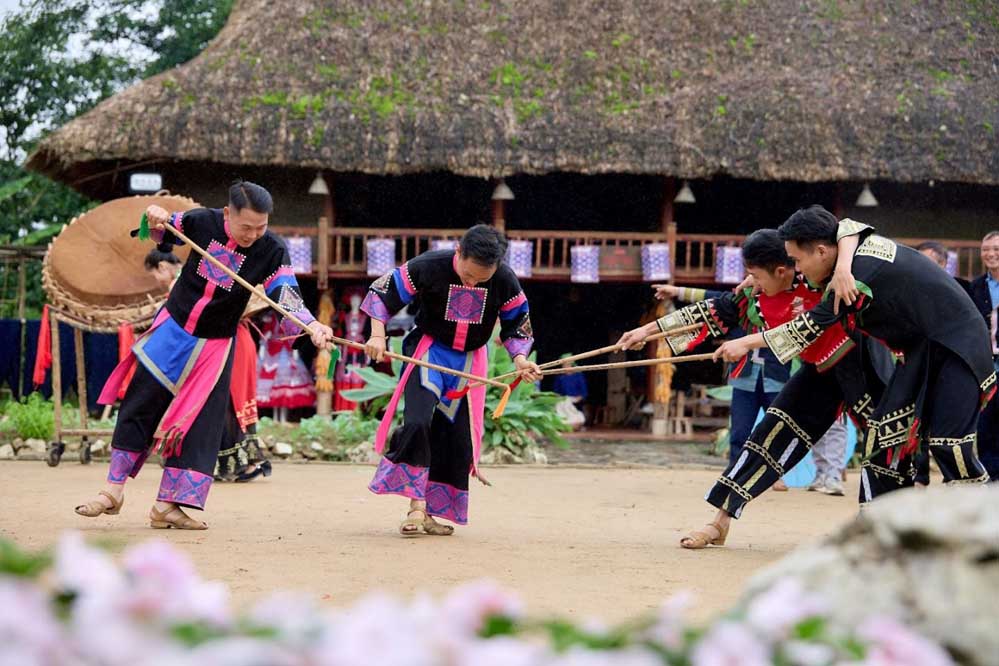
The main attraction for tourists at the "Opening the Heavenly Gate 2026" Spring Festival is May village, where visitors can immerse themselves in the vibrant culture of Northwest Vietnam with a series of elaborately recreated traditional festivals.

The Gau Tao Festival of the H'Mong people (from the 3rd to the 5th day of the Lunar New Year) kicks off a series of festivities with the unique ritual of erecting a ceremonial pole and solemn prayers for a bountiful harvest.

The festival's appeal also lies in its folk games filled with laughter, such as blindfolded duck catching, stilt walking, or climbing a greasy pole, allowing visitors to enjoy refreshing moments of relaxation amidst the majestic nature.

Despite the early morning drizzle and fog, the festive atmosphere remained vibrant, attracting a large number of visitors from all over. The radiant smiles and lively atmosphere at Ban May created an energetic and exciting start to the Year of the Horse at Sun World Fansipan Legend.

A tourist from Hanoi, said: "This is the third time my family has chosen Fansipan to start the new year. Not only do we come to worship and pray for peace amidst the magnificent spiritual space, but we also really enjoy immersing ourselves in the local festivals at Ban May. The feeling of touching the highland culture and participating in folk games is truly very emotional and exciting."

In particular, during this Lunar New Year of the Horse, visitors will have the opportunity to witness the Flag Raising Ceremony, marking the proud and sacred moment of the new year on the "Roof of Indochina".

It is known that, following the Gau Tao Festival, the Xen Ban Xen Muong Festival of the Thai people will take place from February 28th to March 1st 2026, opening up a colorful festive atmosphere with a ceremony reenacting the ritual of the shaman offering gifts to respectfully thank the river and mountain gods and praying for favorable weather and a bountiful harvest.

Source: https://sapaadventure.com/traveller_reviews/thousands-flock-to-sapa-for-spring-festival-rituals.html

Friday, February 27, 2026

Ho Chi Minh City affirms position as regional megacity destination

Saigon Tours - From the beginning of January 2026, Ho Chi Minh City's tourism industry has been working with the local travel business community to plan for welcoming tourists during the Lunar New Year of the Horse 2026.


In particular, many businesses in the industry have prepared their product and service supply chains well in advance and expect to take advantage of the opportunity to increase revenue during the holiday season.

Prioritize key markets

Market observations show that travel businesses in Ho Chi Minh City have proactively developed and introduced a diverse range of short-day tours, city tours, night experience tours, culinary tours, and tours connecting Ho Chi Minh City with neighboring localities. These businesses not only design tour itineraries suitable for the domestic market but also focus on key international markets such as Northeast Asia, Southeast Asia, and Europe, which tend to have shorter stays, combining urban sightseeing, culinary experiences, shopping, and participation in activities celebrating the Lunar New Year (Year of the Horse 2026).

Speaking with reporters, Mr. Dung from Viet Lux Travel said that from very early on, Viet Lux has worked with its network of domestic and international suppliers to prepare a wide range of products and services, as well as build stimulus packages for customers. In particular, for Ho Chi Minh City, Viet Lux will launch several distinctive tourism products in late 2025 and early 2026.

For the international market, the company has developed many products to welcome the Lunar New Year of the Horse 2026. Among them is the "Foreigners Celebrating Tet in the Mekong Delta" product line, and it is expected that in January 2026, Viet Lux will welcome 6 groups of tourists to participate in the Mekong Delta region. The program for foreign tourists to experience the Lunar New Year has been maintained and developed annually for many years, but this year's "Foreigners Celebrating Tet in the Mekong Delta" has received much positive feedback and tour bookings from the international market.

In the restaurant and hotel sector, Ms. Vu Thi Thanh Hien of Kim Do Hotel in Ho Chi Minh City, said that the hotel is busy and excitedly preparing products and services to welcome guests to Ho Chi Minh City before, during, and after the Lunar New Year of the Horse 2026. Kim Do Hotel's advantage lies in its location right on Nguyen Hue Street, so every year during the Lunar New Year, it welcomes a large number of guests who come to experience its products and services after visiting the Nguyen Hue Flower Street in the city.

"With the aim of ensuring excellent service for the number of guests staying at Kim Do Hotel in particular, as well as for groups visiting Ho Chi Minh City in general, the hotel is currently actively developing additional accommodation and culinary services. For example, in front of the hotel, Kim Do Hotel is permitted to operate a food service to offer an increasing variety of local dishes to not only international tourists, but also overseas Vietnamese and domestic guests. In addition, Kim Do also has entertainment programs such as lion and dragon dances, and a festival celebrating the Lunar New Year of the Horse 2026, showcasing the rich Vietnamese identity for guests", said Hien.

To date, travel agencies and accommodation establishments in Ho Chi Minh City have implemented measures to improve the quality of their products and services to ensure effective tourism stimulus during this year's Tet holiday and to guarantee safety in the tourism sector. Simultaneously, these businesses are also focusing their product and service development on two main fronts: ensuring product and service quality development, along with effective communication and promotion in key markets.

According to the Ho Chi Minh City Tourism Association, the tourism industry never takes a break during holidays and Tet (Lunar New Year), and preparations are always underway to serve the potential surge in tourist numbers during peak periods. Travel agencies in Ho Chi Minh City are preparing new products and the best tour programs to meet the demand for the upcoming Tet holiday in 2026. A quick report from several travel agencies indicates that booking airline tickets is currently difficult, demonstrating the high demand for travel during this year's Tet holiday.

Advantages of a "megacity" tourism space

According to experts, 2026 marks a significant milestone as Ho Chi Minh City affirms its position as a "megacity" after the consolidation process, transforming itself into a key economic, cultural, and tourism center of the region. The city has the advantage of attracting large groups of tourists. Besides its urban tourism space, Ho Chi Minh City currently possesses areas for industrial park investment, high-end beach and resort tourism… In this new space, the city can fully accommodate large groups of tourists, and one of the key goals of the tourism industry this year is MICE tourism (Meetings, Incentives, Conferences, and Exhibitions).

Recently, the Ho Chi Minh City Department of Tourism organized a ceremony to welcome the first group of tourists to Ho Chi Minh City in early 2026. This was both an annual welcoming event and a commitment to being a "safe, friendly, and attractive" destination. Through this, the city's tourism industry aims to fully convey the spirit of "openness, youthfulness, vibrancy, enthusiasm, and a forward-looking perspective" to international friends, creating momentum to boost domestic and international tourism growth from the very beginning of the year.

Statistics show that during the 2026 New Year holiday, Ho Chi Minh City's tourism revenue reached VND 2,632 billion. The number of visitors to tourist areas and attractions reached 1,240,000; international visitors reached 75,726; and hotel occupancy reached approximately 75%. In addition, revenue from food, shopping, and entertainment activities increased significantly, contributing to a favorable start for tourism in 2026. These positive signs motivate businesses to prepare and be ready to serve during the 2026 Lunar New Year (Year of the Horse); and allow Ho Chi Minh City's tourism industry to strive for high revenue.

Regarding the plan for the Lunar New Year (Tet) celebration in 2026, the Ho Chi Minh City Department of Tourism, said that, as in previous years, the department will continue to implement previous programs. However, with a new space and a new status, Ho Chi Minh City will develop higher quality and more distinctive programs. Programs spearheaded by the City's Department of Tourism will have fixed dates so that not only domestic but also international tourists are aware of and participate in the city's activities during the annual Lunar New Year.

According to the Ho Chi Minh City Department of Tourism organizes tourist information booths, providing visitors with publications introducing unique inner-city tours and routes, "Culinary Passports," and souvenir gifts. The Department also promotes tourism by displaying souvenir products that reflect Vietnamese cultural values; and providing information on promotional programs and discount vouchers from airlines and partner businesses.

Ho Chi Minh City's tourism industry hopes to collaborate with the travel business community to welcome visitors, especially international tourists, with friendliness and a memorable experience; contributing to making the city a top favorite destination and a vibrant, unmissable journey for all tourists in 2026.

Source: https://saigontraveltour.com/sai-gon-travel-blog/megacity-hcmc-targets-horse-year-visitors/

Cruise ships flood Quang Ninh peak season

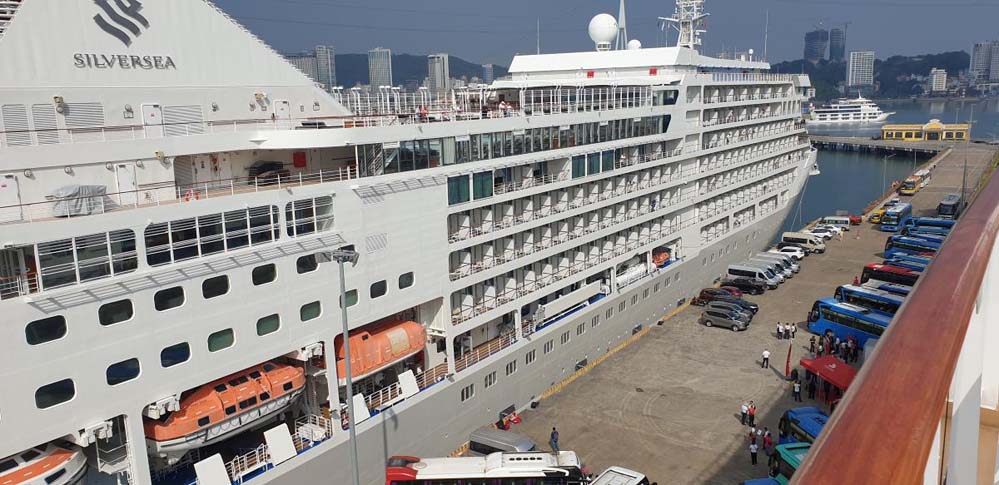
Halong cruise tours - Quang Ninh is entering the peak season for cruise tourism. With proactive efforts in connecting with partners and a synchronized transportation infrastructure, this year's cruise tourism season in Quang Ninh is receiving positive signals as a series of new luxury cruise ships arrive at the port.


In early February, Quang Ninh welcomed several new luxury cruise ships bringing high-end tourists for sightseeing and experiences. Notably, on February 6th, the luxury cruise ship Luminara docked at Ha Long International Cruise Port, carrying nearly 600 passengers and crew. Tourists from the Luminara visited famous Quang Ninh destinations such as Ha Long Bay, the Provincial Museum, and Ha Long Market; experiencing and exploring local culture and cuisine. Ha Long International Cruise Port is expected to welcome eight Luminara cruises this year.

Representatives of the cruise liner highly appreciated Quang Ninh's comprehensive and well-developed transportation and tourism infrastructure, along with its diverse experiences that meet all the needs of tourists. The active coordination of Quang Ninh province and relevant units in ensuring all conditions for welcoming the ships created a positive impression on tourists. This serves as a foundation for the shipping company to strengthen connections and bring more cruise ships to Quang Ninh in the future.

According to the Ha Long International Cruise Port, the arrival of the super cruise ship Luminara at the port not only increases the diversity of international cruise ship passengers visiting Quang Ninh, but also affirms the capacity of Ha Long International Cruise Port in welcoming high-end cruise ships in the ultra-luxury tourism segment.

Previously, the AIDAdiva cruise ship also made its first visit to Quang Ninh, carrying approximately 2,000 passengers, mostly German (98%) and other European nationalities. The AIDAdiva belongs to AIDA Cruises, a leading German cruise line known for its modern, friendly fleet and distinctive kissing-lips design on the bow. Ha Long International Cruise Port had previously welcomed two AIDA Cruises ships: AIDAbella and AIDAvita (now renamed Blue Dream Melody).

Towards the end of 2025, Ha Long International Cruise Port was bustling with international cruise ships. Notably, for three consecutive years (2023-2025), the Celebrity Solstice cruise ship chose to dock here at the sacred moment of transition between the old and new year. It is known that 2025 was a "bumper year" for cruise tourism in Quang Ninh, with Ha Long International Cruise Port welcoming nearly 70 international cruise ships, carrying over 97,000 tourists.

Continuing the growth momentum during the peak cruise season of 2025-2026, from February 17th to 25th (the 1st to 9th day of the Lunar New Year), Ha Long International Cruise Port welcomed 6 luxury cruise ships carrying thousands of tourists from Europe and Hong Kong (China). This further affirms Quang Ninh's position as an attractive destination on the world cruise tourism map.

Recognizing cruise tourism as a key development direction, Quang Ninh has focused on innovating its products and services to suit high-spending tourists. Short-day tours, such as Ha Long City tours, visits to the Provincial Museum and Library, experiences of local cuisine, and cultural and spiritual sites, are designed with flexibility. The province is also promoting linkages between destinations such as Tuan Chau, Van Don, and 5-star resorts to form a chain of comprehensive, multi-layered experiential packages.

With two World Heritage sites, Ha Long Bay and Yen Tu, travel agencies are developing tour routes connecting the two sites, while also introducing them to cruise lines to maximize access to the tourist market. Owning two World Heritage sites is a huge advantage for Quang Ninh in attracting international tourists. With just one destination, visitors can experience two heritage sites simultaneously. Therefore, the company has proactively developed tour itineraries to suit the needs of tourists, combining and maximizing the tourism products of these two sites. Saigontourist is researching and developing a plan to develop Bai Tu Long Bay tours combined with unique tourism products of Van Don to offer new, high-class options for luxury cruise passengers.

It is clear that investing in synchronized port infrastructure and standardizing professional reception procedures are key factors in making Quang Ninh an attractive "anchoring point" on international shipping routes. This will help realize the goal of attracting 22 million tourists in 2026, including approximately 5.2 million international visitors; and generating at least 65,000 billion VND in tourism revenue.

Source: https://halong-tour.com/travelnews/cruise-liners-bring-high-end-travelers-to-quang-ninh.php

Tuesday, February 17, 2026

From ancient pagodas to hero temples Hung Yen beckons spiritual travelers

Private Vietnam Tour - With over 3,700 historical sites and thousands of festivals, Hung Yen is asserting its position as a leading cultural and spiritual destination, transforming its heritage into a driving force for sustainable growth.


Hung Yen, a region located in the heart of the Red River Delta, is becoming a focal point for cultural and spiritual tourism in Northern Vietnam. Benefiting from its proximity to Hanoi and a high density of historical sites, the province attracts visitors not only with its ancient structures but also with its rich cultural heritage preserved over centuries.

Chuong Pagoda: "The most famous scenic spot in Pho Hien"

The first unmissable stop on a spring trip to Hung Yen is Chuong Pagoda. Dubbed the most beautiful pagoda in the Pho Hien area, it boasts a unique "inner courtyard, outer enclosure" architecture and a harmonious "four waters converging" layout. The entire grounds, from the main gate to the Mother Goddess house, exude a serene and ancient atmosphere.

The history of Chuong Pagoda is intertwined with the legend of a golden bell that drifted ashore on a wooden raft in Nhan Duc village during a great flood. Local people worked together to retrieve the bell and build a pagoda to worship it. To this day, Chuong Pagoda is an important link in the Pho Hien Special National Monument complex.

A Sao Temple and the legend of loyalty and righteousness

Located about 50km from Chuong Pagoda, A Sao Temple (A Sao commune) is a place of worship for National Hero Tran Quoc Tuan (Hung Dao Dai Vuong) and his two famous generals Yet Kieu and Da Tuong. This area also preserves a touching story about the war elephants of Saint Tran in the Battle of Bach Dang River in 1288.

When the war elephants became bogged down on the banks of the Hoa River, despite the soldiers' efforts to rescue them, they were unsuccessful. Hung Dao Dai Vuong, with tears in his eyes, had to leave the sacred elephants behind to continue his march. Before departing, he pointed his sword to the river and swore to defeat the Mongol invaders. Today, the A Sao Temple is not only a place of spiritual worship but also a significant site for educating the younger generation about traditions through festivals, calligraphy demonstrations, and folk competitions.

The vitality of a vast heritage system

Hung Yen currently boasts an impressive 3,716 historical sites, including 6 special national historical site clusters, 284 national-level historical sites, and 10 national treasures. In addition, there are over 1,100 traditional festivals and 257 craft villages, creating a diverse tourism ecosystem ranging from spiritual and craft-related experiences to riverine adventures.

According to the Department of Culture, Sports and Tourism of Hung Yen province, the cultural and spiritual tourism remains the core product of the locality. However, the province is promoting the diversification of other products such as community tourism, eco-tourism, and river tourism to enhance the experience for tourists.

Recognizing culture as a driving force for economic development, Hung Yen province has invested heavily in the preservation of historical relics. During the period 2021-2025, the province allocated 1,158 billion VND to restore 210 relics. Notably, the budget of the former Thai Binh province also contributed over 88.5 billion VND to the restoration of many communal houses and temples in the relevant area.

According to the People's Committee of Hung Yen province, cultural industries linked with spiritual tourism will be a new growth driver for the province from 2026. With its location bordering Hanoi and modern urban areas, Hung Yen aims to connect cultural values into a chain of products, transforming tourist traffic into revenue, creating sustainable economic momentum for the locality.

Source: https://privatevietnamtour.com/travel-news/travel-news/hung-yen-emerges-as-northern-vietnam-cultural-tourism-hub.php

Protecting Lan Ha Bay through collective action

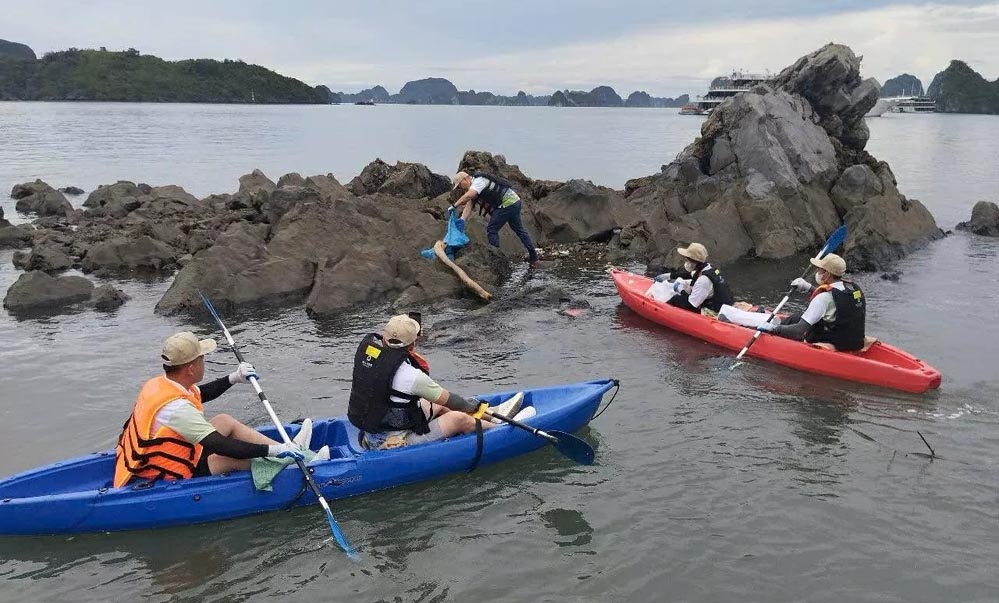
Cruise Lan Ha Bay - In the Ha Long - Lan Ha Bay complex, alongside support from the local government, those who are directly benefiting from this natural beauty have taken the lead in taking action through the movement to collect garbage and protect the environment.


Since 2023, several foreign news sites and magazines have conducted online surveys and included the Ha Long - Lan Ha Bay complex in the "No list" due to warnings about indiscriminate littering causing environmental pollution in the bay.

This has somewhat reduced the number of foreign tourists visiting Hai Phong and Quang Ninh. Meanwhile, Typhoon Yagi in 2024 caused quite serious environmental consequences in these two bays.

Despite this, both localities, from the government apparatus, businesses and people... have made great efforts in collecting and processing waste to restore the landscape and tourism environment.

In recent days, what makes Lan Ha Bay special and unique is the strong environmental awareness of local tourism businesses.

An owner of a cruise ship business in Lan Ha Bay, said: "We understand that Lan Ha Bay is our livelihood. If we don't protect it ourselves, no one else can. Initially, it was just small-scale activities by individual boats and businesses, but gradually, it has become a general movement".

The voluntary garbage collection movement by businesses takes place regularly, usually in the early morning or late afternoon. Businesses, from large travel companies to individual business owners, all encourage their employees to participate.

They use small boats or kayaks to access difficult-to-reach areas, secluded beaches, rocky crevices within the heritage site, and even dive to the seabed to collect waste, especially plastic waste. After collection, the waste is consolidated and transferred to specialized garbage trucks of the Bay Management Board.

Mr. Nguyen Cong, an employee of a cruise on Lan Ha Bay, said: "Many tourists are surprised to see us doing this. They often express admiration and some even volunteer to join us. This shows that our work not only cleans the bay but also spreads the message of environmental protection to tourists".

Thanks to this movement, the amount of waste in Lan Ha Bay has decreased significantly, especially plastic waste, making it cleaner and more beautiful, attracting more environmentally conscious tourists. This not only enhances Lan Ha Bay's tourism image but also contributes to the preservation of its precious marine ecosystem.

"We not only collect trash but also actively educate tourists about not littering," shared Mr. Le Van Thao, a representative of a local tourism association. "Right on the tourist boats, we organize a professional waste sorting process that clearly distinguishes between organic and inorganic waste. In addition, we install air conditioning and disinfection systems that meet standards to prevent environmental damage before transferring the trash to the mainland for processing".

Thao believes that, "with the joint efforts of the business community and support from the government, Lan Ha Bay will forever retain its pristine beauty".

It can be said that the voluntary garbage collection movement in Lan Ha Bay is a prime example of the proactive and responsible approach of the business community and local people in protecting tourism resources.

This is not only an act of environmental cleanup but also a testament to a philosophy of sustainable development, where natural beauty and human consciousness blend together, creating a Lan Ha Bay that is not only beautiful but also leaves a lasting impression on foreign tourists.

Source: https://cruiselanhabay.com/news/community-efforts-restore-beauty-of-lan-ha-bay/

Sunday, February 15, 2026

Ninh Binh's top attractions open during Tet holiday

Vietnam Travel - The Ninh Binh Department of Tourism has announced the operating schedule of tourist areas and attractions in the province during the Lunar New Year 2026, in which some places will temporarily stop receiving visitors on the last day of the year and the first day of the Lunar New Year...


On February 12th, the Ninh Binh Department of Tourism announced the operational plan for tourist areas, attractions, and services in the province during the 2026 Lunar New Year holiday, aiming to facilitate residents and tourists in proactively planning their sightseeing itineraries.

Accordingly, many tourist areas will be closed for two days, February 16-17 (the 29th day of the 12th lunar month and the 1st day of the Lunar New Year ). Specifically, these include: Trang An tourist area, Van Long lagoon, Tuyet Tinh Coc, and Ngam Mountain ecological tourist area.

The Tam Coc - Bich Dong tourist area has adjusted its visitor hours to be more flexible. On February 16th (the 29th day of the 12th lunar month), the area will be closed from 7 AM to 11 AM. On February 17th (the 1st day of Tet), it will be closed from 1 PM to 5 PM. Outside of these hours, Tam Coc - Bich Dong will continue to serve tourists as usual.

Other tourist areas and attractions in the region will remain open throughout the Tet holiday to serve the needs of locals and tourists. These include: Bai Dinh tourist area , Thung Ui, Tam Chuc, Thung Nham bird garden, Mua cave, Hoa Lu ancient capital, Hoa Lu old town, Cuc Phuong National Park and Xuan Thuy National Park.

Following the merger of Nam Dinh, Ha Nam, and Ninh Binh provinces, Ninh Binh has become one of the regions with the highest density of historical sites and scenic spots in the country. According to statistics, the province currently has 5,071 inventoried historical sites; including 10 sites classified as special national-level sites, 264 sites classified as national-level sites, and 832 sites classified as provincial-level sites.

According to the Ninh Binh Department of Tourism, 2025 saw a strong breakthrough in the local tourism industry. The province welcomed 19.42 million visitors, including over 2.2 million international tourists. Total tourism revenue reached 21,278 billion VND, demonstrating the increasing attractiveness of this destination on the domestic and international tourism map.

Source: https://vietnamspirittravel.com/travel-news/visitor-guidelines-for-ninh-binh-attractions-during-tet.asp

Thanh Hoa beckons travelers to its cultural treasures

Cheap Vietnam Tour - Exploring spiritual tourism routes from the sacred site of Am Tien to the Lam Kinh Palace and the ancient Ho Dynasty Citadel... is a journey chosen by many people to visit and pray for peace during the Lunar New Year.


Over the years, Thanh Hoa province has identified spiritual tourism as its strength to attract tourists throughout all four seasons. The province has focused on investing in and restoring historical sites to be clean and beautiful, contributing to enhancing their value and creating attractive cultural and historical destinations.

Many activities are organized to highlight the development of spiritual tourism, such as cultural events, traditional festivals combined with arts and folk games... This enriches and elevates tourism products and increases their attractiveness to tourists.

Community-based ecotourism in Pu Luong and its highland villages is a popular choice for international tourists.

In Thanh Hoa province, from the mountainous regions to the midlands, plains, and coastal areas, there are numerous major spring festivals associated with famous historical sites and scenic spots. After the Lunar New Year , a series of cultural and tourism events take place, allowing visitors to immerse themselves in the joyful and vibrant atmosphere of the festival season.

With a route exploring the western region from the Pu Luong community-based ecotourism area and highland villages, this journey offers a vibrant cultural experience of the Thai and Muong ethnic groups, especially during the Lunar New Year season, and is a popular choice for international tourists.

Descending from the mountains, this route takes visitors through attractive destinations such as Cam Luong Fish Stream, Ho Dynasty Citadel Cultural Heritage Site, Lam Kinh Historical Site, Am Tien National Historical Monument Complex... This route is preferred by many tourists due to its long-standing cultural and historical value, along with a convenient transportation system that easily connects these destinations.

The Lam Kinh National Special Historical Site, with its beautiful natural scenery, has become an ideal destination in early spring. Having weathered many historical ups and downs, after restoration, the site boasts not only tombs and temples honoring the ancestors of the Le dynasty, but also lush green landscapes and harmonious architecture, attracting visitors from far and wide to pay their respects.

At the Phu Na historical and scenic site, which usually welcomes a large number of visitors offering incense during Tet (Lunar New Year), preparations are underway with a focus on preserving cultural beauty and religious civility. The Phu Na Historical Site Management Board has issued a plan for organizing the 2026 festival, deploying inspection teams to monitor service activities, security, and folk games to ensure safety. Regarding traffic flow management, the Management Board is deploying personnel to provide guidance in an orderly manner, helping people perform rituals in an orderly manner and avoiding crowding and pushing during peak periods.

In the journey of "going to the mountains and down to the sea", the complex of historical relics including the Doc Cuoc Temple, Co Tien Temple, and To Hien Thanh Temple (Sam Son ward) is an unmissable destination. Preparations for welcoming visitors are focused on building an image of a civilized and friendly tourist city. The creation of a cultural environment is implemented harmoniously, balancing spiritual elements with urban order, highlighting the value of the relics associated with the unique coastal landscape.

In addition, the Management Board of Ho Citadel Heritage Site and other key relics such as Nua Mountain - Nua Temple - Am Tien are also making efforts to beautify the landscape and arrange the space in a way that is appropriate to its sacred nature. The installation of signs promoting civilized behavior is being implemented synchronously at sites such as Lam Kinh, Ho Citadel, Ba Trieu Temple... aiming to raise awareness among tourists and build a safe and sustainable tourism environment.

To ensure the best service for tourists, the Department of Culture, Sports and Tourism of Thanh Hoa province requests that localities proactively review and prepare the necessary conditions, organize festivals in accordance with the law and respect traditional customs, and fully meet the cultural and religious needs of the people.

Source: https://cheapvietnamtour.com/news/exploring-sacred-sites-and-spring-festivals-in-thanh-hoa.php

Wednesday, January 21, 2026

Hung Ngan waterfall - A hidden gem in Vietnam Central Highlands

Tailor-made Vietnam tours - Hung Ngan Waterfall in Quang Ngai is a hidden gem of Vietnam's central highlands, offering pristine beauty, adventurous trekking, and a serene escape into untouched nature.


Nestled deep within the forests of Kon Plong district, Quang Ngai province, Hung Ngan Waterfall (thac Hung Ngan) is a breathtaking destination for nature lovers and trekkers. With its towering cascades, lush greenery, and tranquil atmosphere, the waterfall remains one of the most unspoiled treasures of Vietnam's central region.

Hung Ngan lies in Kon Plong commune, about 50km from Mang Den town and 20km from Hieu commune center in Quang Ngai province. It sits within the Kon Chu Rang Nature Reserve near Dak Re Hydropower Lake, amid ancient forests along the upper Dak Re River.

The waterfall plunges from high rocky cliffs in a white torrent, surrounded by dense ferns, towering trees, and misty air. Below, clear sequential pools invite refreshing swims amid untouched greenery, creating a symphony of water and wilderness.

Trekking Adventure

Access requires a moderate trek starting from Dak Re dam: park vehicles, then hike narrow forest trails with lush vegetation. Expect 1-2 hours of challenging paths suited for fit adventurers; local guides are essential due to the site's remoteness.

Hung Ngan Waterfall is not just a scenic spot-it's an adventurous journey into the heart of Quang Ngai's wilderness. For those who crave raw nature, cultural immersion, and a break from tourist crowds, Hung Ngan is a destination worth discovering.

Travel guide about Hung Ngan waterfall

How to get there

• Where it is: Hung Ngan lies in Kon Pling village, Kon Plong commune, once part of Hi?u commune.

• Distance: About 50 km from Mang Den town and 20 km from the old Hi?u commune center.

• Route: The journey involves paved roads for most of the way, with the final stretch being rocky terrain. High-clearance vehicles or off-road motorbikes are recommended.

• Nearby landmark: The Ðak Rve hydropower plant serves as a common stop before trekking into the forest.

Travel activities

• Trekking trails: The approach to Hung Ngan involves forest paths, streams, and rocky slopes, perfect for adventure seekers.

• Camping potential: The area around the waterfall provides natural clearings for camping, though facilities are minimal.

• Photography haven: Misty cascades, towering trees, and vibrant moss-covered rocks make Hung Ngan a paradise for photographers.

Cultural & Local Context

• Kon Pling village: The waterfall is part of the cultural landscape of ethnic minority communities in Kon Plong, adding depth to the experience.

• Connection to Mang Den: Often combined with trips to the pine forests and spiritual sites of Mang Den, Hung Ngan offers a more rugged counterpart to the region's serene attractions.

Useful Tips & Considerations

• Best time to visit: The rainy season enhances the waterfall's volume but makes trekking slippery; the dry season offers safer paths.

• Safety: Prepare for remote conditions-bring food, water, and trekking gear.

• Eco-responsibility: As Hung Ngan is still pristine, visitors should minimize impact by avoiding litter and respecting local customs.

• Pack trekking gear like sturdy shoes, trekking poles, long clothes, hat, water, and snacks for a full-day outing. As an undeveloped spot with few tours, visit in dry seasons for safety; enjoy picnics by the pools but respect the fragile ecosystem.

Source: https://tailormadevietnamholidays.com/travel_news/discover-pristine-nature-at-hung-ngan-waterfall-in-quang-ngai.htm