Sunday, June 14, 2026

Where the Soul of Thang Long Lives On in a Riverside Heritage Village

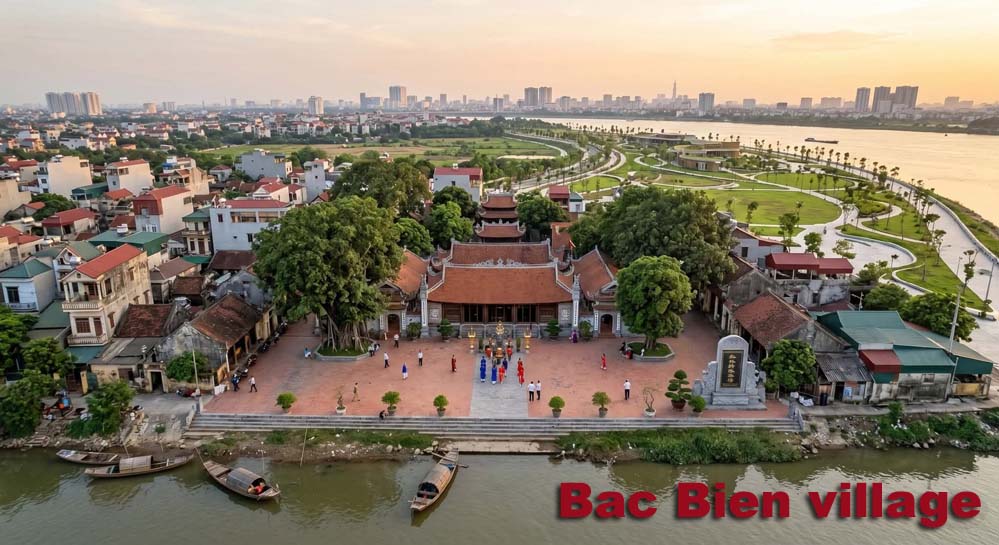
Tailor-made Vietnam tours - Located on the left bank of the Red River, the ancient village of Bac Bien (Bo De ward) preserves a part of the historical image of Thang Long - Hanoi. Amidst the pressures of urbanization and future planning, the challenge of preserving the ancestral spirit while developing sustainable livelihoods for the local people is finding a solution right from the explorations of international tourists. Awakening the potential of community tourism and transforming heritage values into drivers of development is a sensible approach, guiding this thousand-year-old village steadily forward.

The "soul" of Thang Long in the riverside village.

If you take Hanoi's Old Quarter as your center, simply crossing the Chuong Duong or Long Bien bridges to the left bank will immediately reveal a space completely separate from the hustle and bustle of the city. This is the ancient village of Phuc Xa - Bac Bien, a strip of alluvial land shaped like a peaceful "green oasis" embracing the swirling red waters of the Red River.

For tourists , especially high-end international groups - those staying in 5-star hotels in Hanoi and always seeking authentic cultural experiences - Bac Bien Village is a surprising and captivating discovery right in the heart of the capital city.

In early June 2026, we had the opportunity to visit Bac Bien village, following a group of five family members from Iceland to fully experience the unique charm of this riverside land. The journey began early in the morning with a cycling tour around the village. Under the guidance of our tour guide, Dan Tran, the group leisurely cycled through the moss-covered Phuc Xa village gate, where ancient Chinese characters praise the land's auspiciousness and talented people.

Amidst the refreshing morning air, visitors from afar marveled at the fascinating contrast: on one side, the Red River flowed endlessly, its waters swirling with red silt; on the other, the ancient village with its exposed brick houses covered in lush green vines.

The most profound highlight was the visit to a typical family with four generations living together in the village. Stepping across the rustic stone steps, the group was greeted by the host with warm smiles and handshakes. In the solemn main hall, where the ancestral altar is solemnly adorned with fragrant incense, visitors were introduced to the tradition of ancestor worship - a moral bond and a core spiritual aspect of Vietnamese culture.

The father in the Icelandic tour group emotionally shared that, in his industrialized country, generations often live separately; witnessing a large, multi-generational family living together and preserving their family traditions, as in Bac Bien, was an incredibly meaningful and inspiring experience.

After the tour, the whole group gathered around a wooden table to enjoy warm green tea and plates of ripe, early-season lychees. The conversations flowed, from the history of An Xá village's founding during the reign of King Ly Thai To, the story of the resilient people clinging to the river and land through floods, to the similarities and differences in climate and lifestyle between the two countries.

Visitors can visit a typical family with four generations living together in the village, chat with them, and learn about the local culture.

Dan Tran shared: "Western tourists, especially family groups, absolutely dislike commercially-oriented, pre-arranged tourist attractions. What they seek is authentic interaction with the local people. They want to cycle through winding alleys, smell the smoke from cooking fires, see elderly people chewing betel nut on their porches, and hear stories about their family history. Bac Bien Village has plenty of those vibrant elements. The strong family structure and the natural hospitality of the people are the most luxurious tourism resources that no modern theme park can replicate."

The satisfaction of visitors is not simply a random, spontaneous phenomenon. From a management perspective, it is the inevitable result when the original values of the ancient village align with the strategic direction and policy framework that the Hanoi government has been striving to build over the past period.

An Icelandic tourist family poses for a commemorative photo with a four-generation extended family of local residents in front of their home.

To transform this thousand-year-old heritage into a driving force for sustainable economic development, it is first necessary to decipher the unique cultural, historical, and geographical resources that Bac Bien possesses. This is not just an ordinary agricultural area, but a core heritage region with a structure closely connected to the history of Thang Long - Hanoi.

At the core of this resource system is a cluster of national-level historical and cultural relics including Phuc Xa communal house and Phuc Xa pagoda. The ancient Phuc Xa communal house is dedicated to the village's tutelary deities and the Grand Marshal Ly Thuong Kiet, the outstanding national hero who wrote the famous poem "Nam Quoc Son Ha" (Mountains and Rivers of the Southern Country).

Meanwhile, the tranquil Phuc Xa Pagoda houses the ancient An Xa Bronze Bell - a National Treasure recognized in early 2026, with the heritage of nine engraved feudal royal decrees. The vitality of Bac Bien also lies in its traditional festival held from the 6th to the 10th of March in the lunar calendar , featuring a unique water procession ritual on the Mother River, along with the Vietnamese Mother Goddess worship tradition, which has been recognized by UNESCO.

Assessing the inherent potential of the ancient village, Mr. Nguyen Ngoc Anh - Director of Phuong Nam Trading and Service Joint Stock Company - analyzed: "The greatest strength of Bac Bien village is its unique geographical location and the original nature of its ancient village landscape. Located less than 10 minutes from Hoan Kiem Lake, yet upon entering the village gate, visitors feel as if they have stepped into another world . The village's potential lies in exploiting its inherent values. The presence of the National Monument cluster, the story of the hero Ly Thuong Kiet, and the National Treasure An Xa ancient bell are the 'core brands' that will make Bac Bien a model destination for sustainable community tourism, creating fair competition with Duong Lam or Bat Trang".

Sharing the same viewpoint, from the perspective of a local resident directly involved in the profession, Mr. Mac Hung Cuong - a resident of Bac Bien village, currently working at a tourism company and in charge of a volunteer project on community tourism development in the area - shared:

"Through my work and practical experience in many countries such as Singapore, China, Japan, South Korea, France, Italy, etc., I have noticed that these countries have very effectively exploited villages with long histories, where communities have lived for generations. Models such as 'community tourism villages' and 'villages within cities' are very attractive to international tourists because they are places where local culture is preserved and presented in an authentic and vivid way."

Bac Bien village has all the favorable conditions for development in this direction. Besides the system of national-level historical temples and pagodas, and the An Xa ancient bell, a national treasure, the village also preserves the temple system dedicated to General Dao Ky, the Tam Phu Mother Goddess worship, and the presence of many long-standing families such as the Ngo, Nguyen Phu, and Le Dang families… Most notably, it proudly boasts being the birthplace of the outstanding national hero Ly Thuong Kiet.

Besides its rich cultural heritage, Bac Bien boasts a prime location along the Red River tourism axis, just over 2km from Hanoi's Old Quarter and about 1km from the historic Long Bien Bridge. This provides an ideal foundation for developing diverse tourism types, from community-based, cultural-historical, and spiritual tourism to traditional educational tourism , MICE tourism, and experiential accommodation right in the heart of the city. In the future, we hope to seek input and collaborate with local authorities, specialized agencies, and the community to research, propose, and jointly develop tourism in Bac Bien village, contributing to the preservation and promotion of the heritage values of Bo De ward in particular and Hanoi city in general.

The combination of glorious historical elements, ancient spiritual architecture, and the natural landscape of the riverside alluvial plain gives Bac Bien a solid foundation to confidently enter the heritage economy arena.

Awaken your inner self and your desire for a stable home.

The aspiration to build a heritage economy based on the principle of putting people at the center in Bac Bien is entirely achievable through a multi-tiered product axis, closely connecting intangible cultural heritage and natural ecology.

According to Mr. Nguyen Ngoc Anh, the first core product line is Culture - Spirituality combined with Traditional Education. This content axis transforms the cluster of ancient relics into a visual history learning space for the younger generation, while also opening the door to the captivating intangible heritage with the spirit medium rituals at the temples and shrines in the village. For international tourists, this is a powerful "magnet" thanks to the magnificent and authentic combination of mystical folk music, graceful sacred dances, and colorful costumes.

Continuing the spiritual aspect, the second product line focuses on livelihoods and direct income streams for households through experiential tourism. This service axis is designed as a closed loop: developing garden homestays to allow tourists to live at a slower pace outside the dike; implementing a "home meal" model where tourists can go to the market with the host, cook, and enjoy the abundant agricultural products of the alluvial plain; and finally, exploiting team-building programs and cycling to take advantage of the vast green space outside the Red River dike. This value chain is further expanded through spaces for interaction with nature and landscapes, village festivals associated with water-carrying rituals, and modern check-in points for young people such as art cafes and natural film studios harmoniously integrated with local architecture.

For this multi-tiered service chain to operate effectively, the roadmap for bringing ideas to life requires scientific preparation through specific steps. It begins with proactively seeking guidance and approval from local authorities to establish a solid legal framework for the pilot model. Next, the locality collaborates with travel experts and specialized units to develop a detailed operational plan and standardize service procedures before submitting the framework proposal to the competent authorities for approval.

The crucial step that will determine success or failure is the training of internal resources, providing skills in hospitality, service etiquette, and basic foreign language communication to the farmers and elders themselves, in order to preserve the authentic and hospitable local character. Finally, the ancient village will officially launch its practical implementation based on product groups that have strong inherent advantages.

"Within the broader development of the capital city, the community-based tourism model in Bac Bien is a quintessential piece, proving that a thousand-year-old heritage and a modern city can find common ground, a perfect blend to help the nation rise together," Mr. Anh emphasized.

Looking at the overall picture, the development of community-based tourism in Bac Bien ancient village is perfectly in harmony with the strategic vision of the Red River Landscape Boulevard Construction Project, aiming to transform the "Mother River" into a green space center of the capital in the new century. Developing community-based tourism is the golden key to resolving the dialectical relationship between conservation and development, between the interests of the State and the long-term livelihoods of the people, enabling the thousand-year-old heritage to break through and shine proudly in the new era.

Source: https://tailormadevietnamholidays.com/travel_news/breathing-new-life-into-bac-bien-through-culture-tourism.htm

Infrastructure and Innovation Drive Lao Cai Tourism to New Heights

Sapa Tours - In recent years, the Lao Cai tourism brand has gradually gained recognition on the national and international tourism map with its unique appeal and many outstanding destinations honored by prestigious international organizations.


To achieve the goal of making tourism a key and breakthrough economic sector by 2030, Lao Cai is stepping up efforts to attract investment and upgrade tourism infrastructure and technical facilities to exploit and develop new key tourism areas, destinations, and regions.

Sa Pa - a key growth engine.

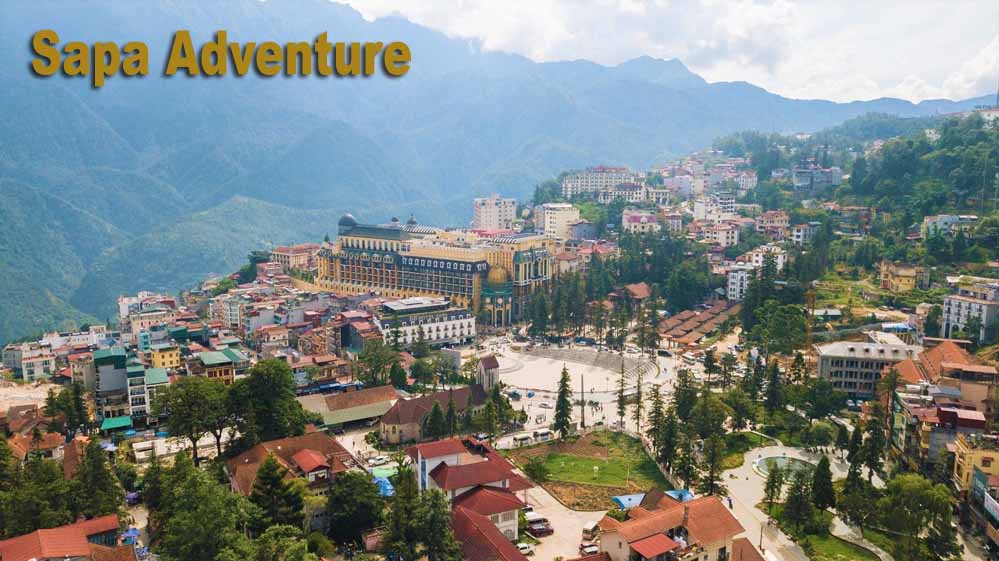
With a rich history spanning over 120 years on the tourism map, Sa Pa is making a strong breakthrough to become a world-class tourism service center. Over the past 10 years (2016-2026), the growth of Sa Pa tourism has not just been a simple upward trend, but a complete transformation in status and revenue. While the milestone of nearly 1 million visitors in 2016 was considered a miracle, the figure for 2025 truly demonstrates Sa Pa's unlimited appeal. The number of visitors reached a record high of over 4.3 million - a 4-5 fold increase in a decade. Sa Pa's tourism revenue reached 19,000 billion VND, 11 times higher than a decade earlier.

The recognition and affection that domestic and international tourists have for Sa Pa largely stems from the effective application of the strategic thinking of "transforming heritage into assets," combined with trillions of dong invested in infrastructure, in the spirit of harmoniously combining majestic natural landscapes, world-class architecture, and local cultural values that are properly honored.

In the journey of transforming the face of Sa Pa, the role of strategic investors, including Sun World Fansipan Legend, cannot be overlooked. For many consecutive years, Sun World Fansipan Legend has been honored by the World Travel Awards (WTA) - an award dubbed the "Oscar of the world tourism industry  - with titles such as: "World’s Leading Cultural Destination", "World’s Leading Natural Scenic Destination", and "Asia’s Leading Destination".

Mr. Nguyen Anh Vu, Deputy Director of Fansipan Sa Pa Cable Car Tourism Service Co., Ltd. - Sun World Fansipan Sa Pa Branch, said: "Thanks to the consensus and close cooperation of the government, we have been able to realize iconic projects such as the Fansipan cable car - the first cable car in Vietnam to set two Guinness World Records, contributing to making Sa Pa one of the fastest-growing destinations in Asia."

Identifying tourism as a key economic sector, Lao Cai aims to welcome approximately 15 million tourists by 2030, contributing over 20% to the province's GRDP. In this plan, Sa Pa continues to play a core growth pole role with many key projects and initiatives being activated.

For example, the recent EcoSapa project, covering approximately 29.3 hectares with a total investment of over 2,400 billion VND, is being officially launched by Hong Phong Investment and Development Co., Ltd. and Ecopark Hai Duong Investment Joint Stock Company. The project aims to create a green living space that harmonizes with the natural hilly terrain, while preserving and integrating the distinctive landscape of the O Long tea hills and the local ecosystem into the overall development.

According to To Ngoc Lien, Secretary of the Party Committee of Sa Pa ward, the locality is determining the planning boundaries and mobilizing resources to invest in internal infrastructure connections; at the same time, it is proposing that the province call for large-scale projects with synchronized infrastructure to welcome large groups of tourists, serving the orientation of smart, sustainable and distinctive development.

Opening the way to unlock tourism potential.

Lao Cai aims for an average annual tourism growth rate of 20% by 2030; to welcome 15 million tourists; and to achieve total tourism revenue of 70,000 billion VND, contributing directly 17% to 20% of the province's GRDP. To achieve this goal, Lao Cai is promoting investment and upgrading tourism infrastructure and facilities.

Y Ty commune is poised for significant tourism development in the coming period as infrastructure bottlenecks in the area and surrounding regions are resolved. In early 2026, after a long wait, the project connecting Ban Xeo - Den Sang - Y Ty and the investment project to build the Y Ty tourism sub-area within the Sa Pa National Tourist Area were completed, much to the joy and excitement of the local people and tourists.

Ms. Nguyen Thi Tinh (a tourist from Phu Tho province) and her family chose Y Ty as their destination for sightseeing and relaxation during the recent April 30th holiday. Ms. Tinh said that she had heard the road to Y Ty was now beautifully paved, so she decided to choose it as her destination. "Now, the travel time from Lao Cai ward to Y Ty commune is only about 2 hours, making transportation faster and more convenient, and reducing fatigue for travelers."

During this year's April 30th - May 1st holiday, Y Ty commune still welcomed nearly 4,000 tourists, with an increased length of stay compared to previous years. According to the Chairman of the People's Committee of Y Ty commune, Nguyen Van Tai, Y Ty has great potential in agriculture and tourism. These are also two key areas in economic development and improving the lives of the people. However, difficulties in connecting transportation infrastructure have prevented these strengths from being fully exploited. "In the near future, Y Ty will invest in and upgrade the main village and inter-village roads connecting to this main road to create a complete transportation network," Mr. Nguyen Van Tai added.

Currently, Lao Cai has approximately 106 projects attracting investment for tourism development in the 2026-2030 period. Regarding transportation infrastructure, the province is focusing on mobilizing and attracting resources to invest in the construction of Sa Pa Airport, regional and inter-regional connecting roads, especially those connecting within the province's tourism development area. Lao Cai is investing in a road connecting the Noi Bai - Lao Cai expressway to the Y Ty tourist area; expanding the Noi Bai - Lao Cai expressway to ensure seamless connectivity from Hanoi to the Sa Pa tourist center; and linking Mu Cang Chai with Sa Pa, creating a unique "heritage route" connecting the two famous terraced rice fields, forming a closely connected network between Son La, Lai Chau, Tuyen Quang, and Lao Cai provinces via the Noi Bai - Lao Cai expressway.

Regarding tourism infrastructure, Lao Cai province prioritizes investment in building a synchronous and modern tourism infrastructure with strong linkages. This includes prioritizing the development of environmentally friendly hiking trails (mountain climbing, trekking), professional off-road racing tracks, and paragliding sites; constructing supporting tourism facilities along the routes, including scenic viewpoints, parking lots, signage systems, and standard restrooms; and upgrading transportation systems connecting tourist destinations, as well as providing clean water, electricity, and roads for community tourism sites.

Key projects and initiatives being activated in the locality promise to help improve the quality of services, expand development opportunities, and thereby solidify Lao Cai's position as a leading tourist destination both domestically and internationally.

Source: https://sapaadventure.com/traveller_reviews/lao-cai-unlocks-new-opportunities-for-tourism-expansion.html

Thursday, June 4, 2026

Quality over quantity the new logic of Ho Chi Minh city travel

Saigon Tours - The April 30th–May 1st holiday saw a large influx of visitors, but travel behavior has changed. In this context, Ho Chi Minh City is showing signs of shifting from a transit hub to an experiential destination, clearly reflecting the changing market.


After the April 30th - May 1st holiday in 2026, tourist numbers remained high, but the way Vietnamese people travel has changed. Instead of focusing on long trips or crowded destinations, many are opting for shorter trips, concentrating on specific experiences. This shift shows that the market is not only recovering in terms of quantity but is also changing its growth pattern.

The recent holiday period recorded over 12 million visitors nationwide, with many localities achieving significant revenue such as Ho Chi Minh City with approximately 8,700 billion VND and Da Nang with over 5,700 billion VND. However, the flow of tourists is no longer concentrated in a few specific times or destinations as before.

The fact that the two holidays are close together encourages tourists to proactively break down their plans and travel in multiple trips. Local authorities are also introducing new products, from night tours to eco-tourism experiences, helping to alleviate pressure on the city center.

The key takeaway lies in how travelers manage their time and budget. Instead of opting for long trips with packed itineraries, many people shorten their journeys but dedicate more time to each experience.

Slow travel models or short vacations are no longer experimental but have become a popular choice. This has led to a shift in destination selection criteria, with the experiential element becoming more important than the number of destinations.

This shift in behavior is closely linked to infrastructure and market operations. Increased flights, expanded highways, and the addition of waterway transport help shorten travel times. As time costs decrease, tourism is no longer confined to a single long vacation, but can be broken down into multiple trips throughout the year. Simultaneously, stimulus programs and flexible product offerings further reinforce this trend.

Within that overall picture, Ho Chi Minh City stands out as a clear example of market shifts. During the nine peak days, the city welcomed approximately 1.7 million visitors, including 190,000 international tourists, generating total revenue of around 8,700 billion VND.

What's noteworthy is not just the scale, but the way the city organizes its products. Instead of relying on its previous role as a transit hub, Ho Chi Minh City is shifting towards building an experiential ecosystem right in the heart of the city. A series of events such as the Tourism Festival, the Bread Festival, art programs, and fireworks displays have created reasons for tourists to stay longer.

Alongside this is the revitalization of traditional tours with a focus on specific themes. Programs such as heritage itineraries, river experiences, metro tours, classic car tours, or expansion to Can Gio and Cu Chi demonstrate efforts to extend tourism beyond the central area. The emergence of products like helicopter tours, cruises, and night tours also reflects a trend towards enhancing experiential value rather than simply increasing the number of destinations.

From a market perspective, Ho Chi Minh City is no longer just a place to "pass through," but is becoming a destination capable of retaining tourists with multi-layered experiences, from culture and cuisine to high-end services.

The shift towards "travel less but deeply" is creating a new growth logic for the entire industry. Businesses are no longer competing solely on the number of customers, but must increase the value of each experience. Shorter stays force accommodation providers, travel agencies, and destinations to optimize services within a short period, while also developing additional products to retain tourists.

In this context, the role of the destination is also changing. Resource advantages are no longer the sole determining factor; instead, the ability to design experiences and organize products has become the core competitive element. Localities that proactively innovate products, expand spaces, and connect infrastructure will have a distinct advantage in adapting to this trend.

What happened after the April 30th - May 1st holiday shows that Vietnamese tourism is entering a restructuring phase. Growth is no longer measured primarily by the number of visitors, but is gradually shifting towards the quality of experiences and spending levels. In this context, the question is not about how many more tourists to attract, but how the market will adapt to a tourism model that operates on many short trips but demands increasingly deeper experiences.

Source: https://saigontraveltour.com/sai-gon-travel-blog/beyond-a-transit-hub-how-ho-chi-minh-city-keeps-visitors-longer/

Quang Ninh tourism records strong growth across beaches and islands

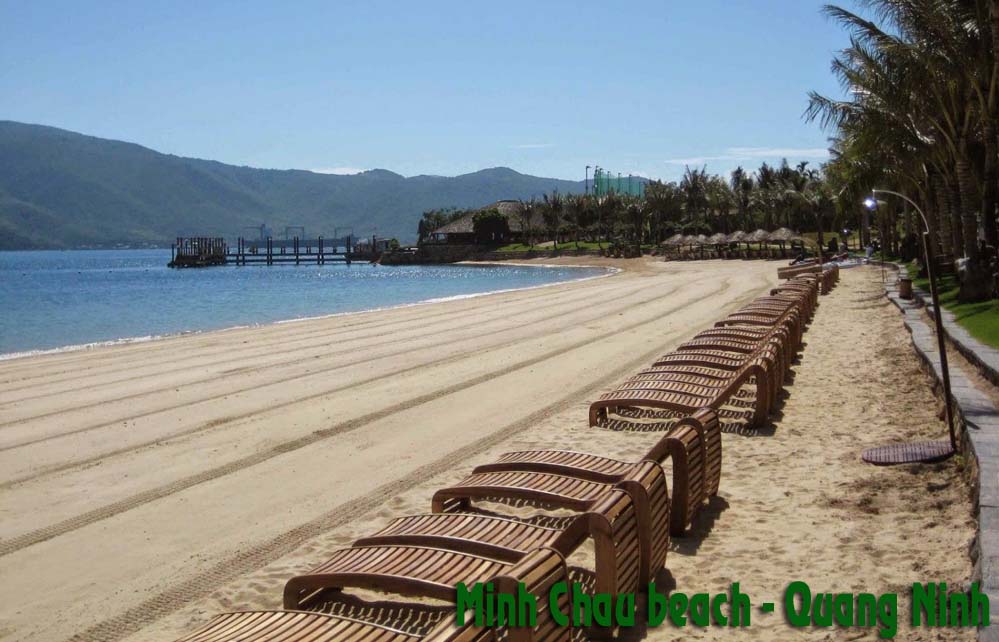
Halong cruise tours - During this year's April 30th - May 1st holiday, Quang Ninh's coastal and island tourism continued to "boom" with a high increase in visitors, especially on the islands of Co To, Quan Lan - Minh Chau... The proactive preparation of localities, service businesses, and relevant agencies contributed to providing tourists with exciting and attractive experiences.


During the three-day holiday, the number of visitors passing through Ao Tien High-Class Port to the islands of Co To, Quan Lan, and Minh Chau reached over 30,000, a significant increase compared to previous holidays. From early morning, the port area was bustling with activity; boats continuously departed, transporting tourists to various destinations. This demonstrates the increasing attractiveness and the growing trend of tourists returning to these island destinations. Co To, Quan Lan, and Minh Chau continue to impress with their pristine beauty, clear blue beaches, and peaceful atmosphere – factors increasingly favored in resort tourism.

On April 30 alone, the Van Don Special Economic Zone welcomed approximately 32,000 visitors for sightseeing and relaxation, with over 12,000 of them visiting the islands.

Besides the natural scenery, tourists particularly enjoy hands-on experiences such as strolling along the beach, cycling through pine forests, savoring fresh seafood, and participating in activities that reflect the local culture.

Ms. Hang from Hung Yen province said: "I have traveled to many places, but I still like to return to Quan Lan - Minh Chau because the sea is clean, the air is fresh, the services are becoming increasingly professional, and it still retains its pristine beauty".

Mr. Duc from Hai Phong also said: "Co To is now more convenient to travel to, has good services, reasonable prices, fresh air, and is not as crowded as some other tourist destinations. This is why I chose to bring my family there for the holiday".

The combination of pristine natural beauty and increasingly improved service quality is helping Quang Ninh's island routes become attractive destinations, not only during holidays but also maintaining a stable appeal throughout the summer tourist season.

To ensure convenience and safety for tourists traveling to and from the islands, weeks before the holiday, the port system, water transport units, and relevant agencies proactively developed appropriate operational plans and strategies, effectively utilizing existing infrastructure.

The Executive Director of Ao Tien High-Class Port said: "We have coordinated with relevant units to develop a reasonable ship regulation plan, increase manpower, arrange information counters, and scientifically manage traffic flow to ensure passengers move quickly and safely, preventing congestion".

Not only at the Ao Tien high-end port, but also at other ports and tourist destinations on the island, plans have been proactively implemented to welcome visitors, manage traffic flow, and deploy support forces. Security, environmental sanitation, and rescue operations are being carried out synchronously, contributing to building a safe and friendly tourism environment.

Ms. Ha from Hanoi said: "We were very impressed with the professionalism from the boat transportation to the services on the island. Everything was convenient, with no crowding or price gouging".

To meet the increased passenger demand, waterway transport companies have proactively increased trip frequency, conducted thorough vehicle inspections, and ensured sufficient life jackets and other safety measures before departure. A representative from Hoang Vy Transport and Tourism Company Limited stated: "The company has increased the number of daily trips and instructed crew members to strictly adhere to safety regulations, not to exceed the permitted passenger capacity, and to ensure the absolute safety of passengers throughout the journey"

Prior to the holiday, accommodation and food service establishments on the islands proactively prepared with sufficient facilities, personnel, and supplies. In the Quan Lan - Minh Chau area and the Co To special zone, many accommodations were fully booked early. Restaurants increased their stock of fresh seafood and essential goods to meet the high demand from tourists.

Ms. Trang, owner of Trang Dinh restaurant (Minh Chau Island), said: "We prepared our food supplies about a week before the holiday and increased our staff to ensure the best quality service for tourists"

One positive aspect of this year's tourism season is the public and transparent pricing displayed by service businesses. Local authorities have intensified inspections and supervision to prevent price gouging, contributing to building a civilized and friendly image for Quang Ninh tourism.

Ms. Nguyen, Deputy Head of the Culture and Social Affairs Department of Van Don Special Economic Zone, said: "Even before the Hung Kings Commemoration Day holiday, the locality proactively implemented plans to welcome domestic and international tourists. 100% of tourism businesses were required to publicly display prices and sell at the listed prices. Inter-agency inspection teams were maintained regularly throughout the holiday and the peak summer tourist season".

In addition, food safety and hygiene are given special attention. Inter-agency inspection teams are increasing surprise inspections at restaurants and food processing and trading establishments, promptly detecting and correcting violations, contributing to ensuring the rights and health of tourists.

The vibrant activity of Quang Ninh's coastal and island tourism during the April 30th - May 1st holiday not only reflects the growing appeal of these destinations but also demonstrates the effectiveness of management, organization, and service quality improvement. With comprehensive and systematic preparation, Quang Ninh continues to affirm its position as a leading coastal and island tourism destination in Northern Vietnam, contributing to economic growth and promoting the local image to domestic and international tourists.

Source: https://halong-tour.com/travelnews/summer-season-promises-strong-tourism-of-quang-ninh.php