Tuesday, July 28, 2026

How Mountain Kings Shaped Northern Vietnam and the Historic Mansions

Private Vietnam tour - The "kings" of the northern mountainous region: Vuong Chi Sinh, Hoang A Tuong, and Deo Van Long were once glorious under the protection of the French colonialists.

After the collapse of the colonial-feudal regime, these "kings" also "took their hats and left", but their mansions, built with the sweat and tears of the people, remain, becoming cultural landmarks for future generations to learn about a bygone era...

The Vuong family mansion

Anyone who has ever set foot in Dong Van (Ha Giang) - the northernmost point of the country - cannot miss visiting the Vuong family mansion located in the Sa Phin valley. The mansion was built during the time of Vuong Chinh Duc - a high-ranking official appointed by the protectorate government to govern this strategically important border region of Vietnam.

Located on the opium trade route from southwestern China to Myanmar, Vietnam, and other Southeast Asian countries, Dong Van, with an average altitude of over one thousand meters above sea level and a rocky mountainous terrain, was ideal for growing opium poppies. Vuong Chinh Duc became a crucial link in the opium trade, suddenly becoming wealthy and powerful, proclaiming himself the "king" of the Hmong people in Ha Giang.

The Vuong family mansion was built in the late 19th century by more than 300 Hui (Chinese) craftsmen on a tortoise-shell-shaped mound in the middle of the Sa Phin valley, chosen by a Chinese geomancer.

The architecture of the complex is strongly influenced by Chinese feudal architecture, comprising a front, middle, and rear building. Connecting the three two-story wooden houses with rammed earth walls (the architecture of the Mong, Dao, Pa Di, Ha Nhi... ethnic groups in the high mountains) is a stone-paved courtyard. The "king's" residence is the innermost house with stone walls, behind which is an escape tunnel. All the houses are roofed with yin-yang tiles, some decorated with opium poppy flowers, which are believed to have helped Vuong Chinh Duc become the "King of the Hmong" in the border region. Surrounding the mansion is a 0.8m thick stone wall with numerous loopholes and guard towers. From a military perspective , it served as both a residence and a fortified stronghold in times of conflict.

When Vuong Chinh Duc passed away, he handed over power to his second son, Vuong Chi Sinh. When the August Revolution of 1945 broke out, Vuong Chi Sinh's troops, in coordination with the Viet Minh Front, drove the French forces out of Ha Giang. After the revolution's success, President Ho Chi Minh invited Vuong Chi Sinh to join the first National Assembly and they became sworn brothers, changing his name to Vuong Chi Thanh and presenting him with a precious sword, its scabbard engraved with eight characters: "Utmost loyalty to the nation/Never to be enslaved."

Hoang A Tuong Mansion

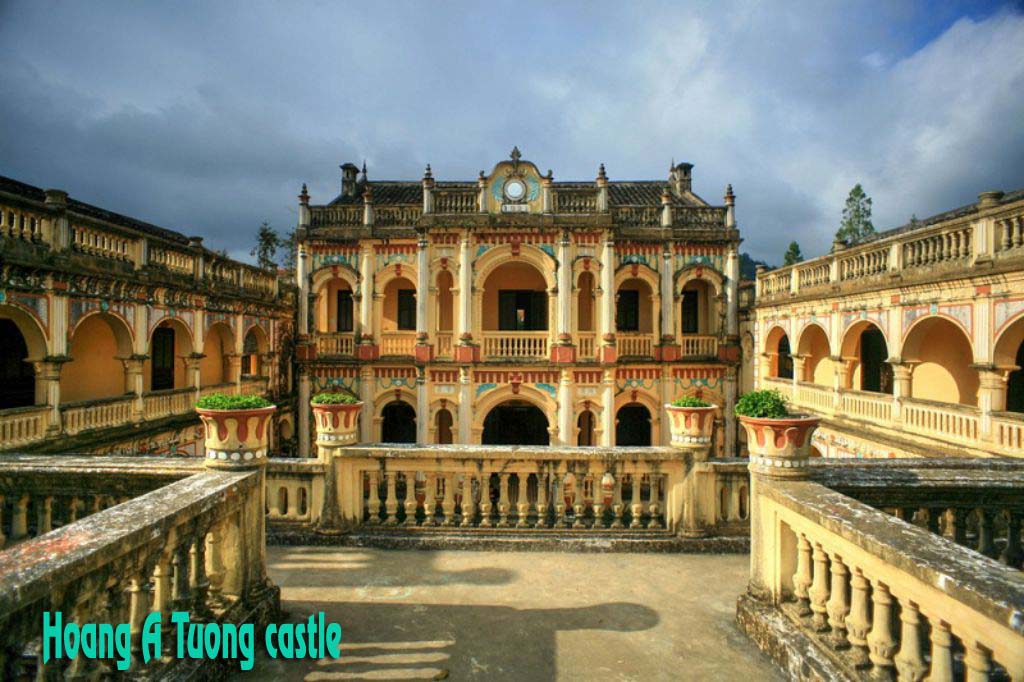
The Hoang A Tuong mansion is located in Bac Ha town, Lao Cai province, on the road to Si Ma Cai. Hoang A Tuong was of the Tay ethnic group, but ruled over a region where over 80% of the population was Hmong, earning him the nickname "King of the Hmong". Hoang A Tuong was the son of Hoang Yen Chao, a local chieftain of the Bac Ha plateau. Before the liberation of Lao Cai (November 1950), Bac Ha was not only a Silk Road connecting to Yunnan via Central Asia, but also a transit point for opium from Central Asia through Indochina to South Asia and vice versa. Hoang A Tuong collected 500 kg of opium annually from the people, forcing them to sell another 500 kg cheaply, leading the opium and other goods trafficking network across Asia via Bac Ha.

The Hoang A Tuong mansion faces southeast, its back against Co Tien Mountain, in accordance with the Chinese feng shui principle: "leaning against the mountain and stepping on the water", creating a very stable position. The architecture of the mansion combines the ancient French architectural style of the 17th-18th centuries with the stilt house architecture of the Tay people, harmoniously standing out amidst the majestic mountains.

The mansion of Hoang A Tuong was built over a period of eight years (1914-1921), using materials including locally sourced stone, lime, sand, and molasses, while cement and steel were transported by plane and pack horses from Hanoi and Lao Cai.

Deo Van Long Mansion

The Deo Van Long mansion is located at the confluence of the Da River, the Nam Na River, and the Nam Lay stream; formerly part of Le Loi ward, Lai Chau town (old), after Lai Chau was divided into two provinces, Lai Chau and Dien Bien, the Deo Van Long mansion is now located in Le Loi commune, Sin Ho district, Lai Chau province.

According to historical documents , Deo Van Long was the son of Deo Van Tri, who governed twelve Thai territories (Sipsong Chuthai). In the late 19th century, Deo Van Tri responded to the Can Vuong Proclamation, leading the Thai ethnic group and several other ethnic groups in the Lai Chau region to revolt against the French. After being persuaded, Deo Van Tri surrendered to the French, paving the way for their advance into Muong Thanh. The French then restored Deo Van Tri's rule over the Sipsong Chuthai region on the banks of the Da River, allowing for hereditary succession.

The Deo Van Long mansion was built in a strategically important location, with high mountains behind it and a wide river in front. This crucial position allowed him to control the routes to Phong Tho, Sa Pa, Muong Te, and down to Hoa Binh, as well as through Dien Bien to Laos.

After the victory at Dien Bien Phu, Deo Van Long fled to France with his wife and children. Deo Van Long's mansion, left uninhabited, fell into ruin over time. What remains shows that the architecture of the complex was a combination of the stilt house architecture of the Thai people and French architecture. The main house was a two-story structure built of red brick with wooden floors. Surrounding the main house were smaller buildings for residents and soldiers, enclosed by a thick brick and stone wall over 40cm thick with many loopholes, and over 3m high. In front of the complex was a large courtyard for traditional dances during celebrations. The roof tiles were made from slabs of stone - which the locals called "paper stone" - soft enough to be cut with a knife when first separated, but hardening like earthenware when exposed to the sun.

Previously, Lai Chau province had planned to restore the Deo Van Long mansion, but when the Son La hydroelectric project was implemented, the entire Deo Van Long mansion complex would be submerged under the reservoir. After October 2010, when the water level of the Son La reservoir rises, the entire mansion of this "Thai king" would be underwater.

Source: https://privatevietnamtour.com/travel-news/travel-news/untold-history-behind-the-grand-mansions-of-vietnam-ethnic-mountain-kings.php

Experiencing the Untouched Beauty of Cai Chien Island

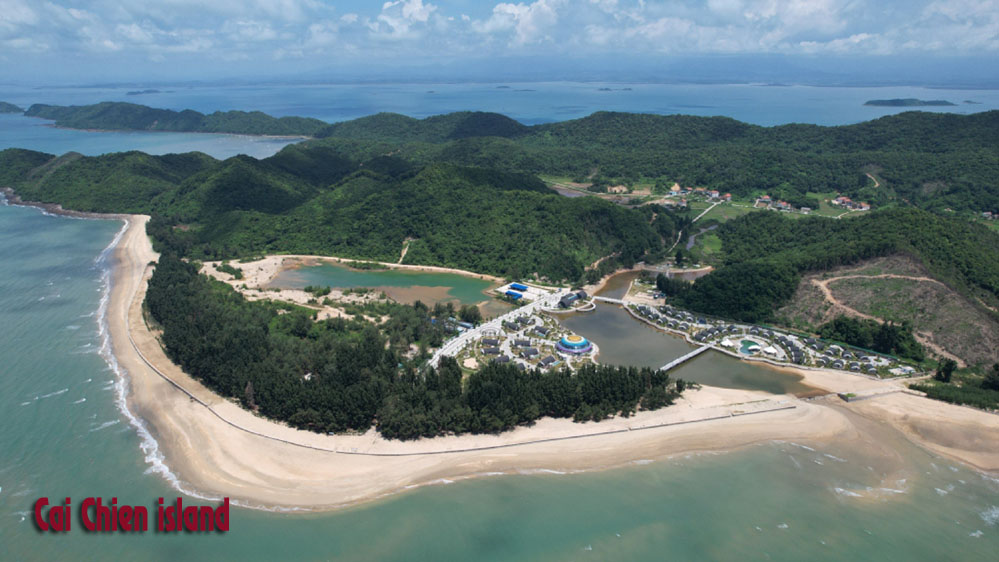
Halong Bay Tours - Cai Chien Island belongs to Cai Chien commune, located approximately 330 km northeast of Hanoi. The island covers an area of 27 km2, with a predominantly hilly and mountainous terrain and primary forest. The coastal areas of the island have many rocky islets.


Compared to larger tourist islands in the region such as Co To or Quan Lan, Cai Chien is likened to a "gentle and quiet younger sibling". The island has about 150 households, fewer than 1,000 people, who mainly live by farming and fishing. Tourism has only begun to develop in recent years.

The island has few services, shops, entertainment activities, and famous check-in spots. Cai Chien is a natural destination, ideal for rest and relaxation, perfect for "slow living" travel.

Cai Chien doesn't have a bustling fish market or fishing village like many other coastal areas. Every morning, locals bring vegetables, meat, tofu, and other necessities from the mainland to sell to the islanders.

How to get there

From Hanoi and surrounding provinces, tourists can travel to Ghenh Vo pier (Quang Ha commune) by road via the Hanoi - Hai Phong (CT04) and Hai Phong - Mong Cai (CT06) expressways. The journey takes approximately 4 hours.

From provinces and cities in Central and Southern Vietnam, tourists can fly to Van Don (Quang Ninh) or Cat Bi (Hai Phong) airports. By train, tourists can get off at the nearest station in Hai Phong, then travel by road to Ghenh Vo ferry terminal.

From Ghenh Vo pier, there are two ways to get to the island: by speedboat or ferry. The ferry carries people and vehicles including motorbikes and cars with 4 to 29 seats.

The ferry ride takes about 45 minutes. The journey is longer, but the ride is smooth and offers scenic views. Taking a speedboat is faster, about 15 minutes, but can cause seasickness. The ferry ticket costs 40,000 VND per trip.

If traveling in a large group, tourists can book a private speedboat. A round-trip speedboat costs 3 million VND for about 20 people. If traveling in a small group or individually, tourists can wait to share a speedboat, at 100,000 VND per person.

Visitors can purchase tickets at the pier or contact homestays in advance. The earliest departure is around 6:30 AM.

Traveling on Cai Chien Island

Electric vehicles transport guests from the port to homestays and are also the main mode of transportation on the island. The price for electric vehicles is publicly listed, approximately 150,000 VND per vehicle from the port to the beaches. Renting a vehicle to explore the island on weekends costs 1 million VND per vehicle, and 800,000 VND per vehicle on weekdays (maximum 13 passengers).

Alternatively, tourists can rent motorbikes from locals for 250,000 VND per day or 150,000 VND per half day, or bring their own vehicles from the mainland to the island.

Most accommodations on the island are homestays and guesthouses such as Tuan Trung, Ngan Anh, Nhu Quynh, Moc, Sinh Hong, Tung Duong, Anh Hoan Wooden House, Hoang Cuong, Huong Truong, Phi Vung, Hoan Hang, and Dao Ngoc Retreat. Most of these are located near the beach. Room rates range from approximately 500,000 to 800,000 VND per night for a double room.

Hotels and resorts in Cai Chien island

Huan Khai Hotel, priced from 1 million to 1.5 million VND per night, and Dau Rong Resort, priced from 1.8 million to 3.6 million VND per night, are the most luxurious resorts on the island.

Attractions and activities in Cai Chien island

Natural beaches

Cai Chien 1 and Cai Chien 2 both feature natural golden sand with pebbles of varying sizes and colors. These beaches are quite steep, lack lifeguards, and local authorities advise against swimming. If the waves are moderate in the morning, visitors can swim. However, when the tide rises, the waves are large and the water is deep, so children should not swim and should wear life jackets for safety.

Cai Chien 2 is the most vibrant beach on the island, with many homestays. There are also drink stalls serving tourists. If you prefer a quieter and more unspoiled environment, you can go to Van Ca Beach or Vung Bau, about 3 km from the center of Cai Chien.

Dau Rong Beach

Located within the grounds of Dau Rong Resort, this artificial beach, filled with fine sand, is considered the longest and most beautiful beach on the island. The beach is flat and safe for adults, children, and even non-swimmers.

In the morning, visitors can venture about 150 meters from the shore, where the water is only waist-deep. In the afternoon, when the tide rises, visitors are only allowed to swim within the safety buoyed area designated by the resort. On the shore, there are lifeguard huts, shower and changing facilities, life jacket rentals, tables and chairs, or storage sheds.

Khe Dau Lake

Khe Dau Lake serves as a freshwater reservoir for the island's inhabitants. The lake is large, with clear blue water, surrounded by shady trees. Khe Dau is also a beautiful spot for photography if visitors don't mind the heat. Visitors should come here at sunset to admire the beautiful sunset.

Squid fishing - snail catching

Depending on the season and weather conditions, visitors can participate in squid fishing tours, regular fishing tours, or net fishing for clams and snails. Visitors can take their catch home. The homestay will also help guests prepare a variety of dishes from their catch. Prices are calculated per tour or based on the weight of the catch taken home. Each tour is usually for 5 or more people.

Take a check-in photo

Cua Dai Sand Bay (at the end of the island), Cai Chien pier, and the areas in front of homestays at Cai Chien 2 beach are popular spots for tourists to take photos and check in. Along the roads around the island and along the beaches, tourists can stop anywhere to take beautiful pictures.

Eating in Cai Chien island

Cai Chien doesn't have as many restaurants or cafes as other tourist destinations. Typically, visitors order food directly from their homestay. It's advisable to order in advance so the homestay owner can go shopping. Some homestays also accept non-resident guests. Local specialties include grilled catfish and bearded chicken, usually grilled or steamed.

In the morning, a few local houses open to sell vermicelli, pho, seafood rice noodles, mixed toppings, and a few small cafes and convenience stores to serve the basic needs of tourists. Suggested addresses: Bong Coffee, Ngoc Hoang Cafe, Ghenh Dun Cafe, and the bubble tea shop at Beach 2.

Note

The peak season in Cai Chien is from April to September. Tourists should book their accommodations at least two months in advance, especially on weekends. To avoid crowds, visitors should come to Cai Chien on weekdays.

Most roads on the island are unlit (except at intersections and the town center), the population is quite sparse, so tourists should be mindful when traveling at night.

Source: https://travelhalongbay.com/news/a-complete-travel-guide-to-cai-chien-island.html

Sunday, July 26, 2026

Quang Ninh, Hai Phong Cooperate to Preserve and Promote Heritage Value

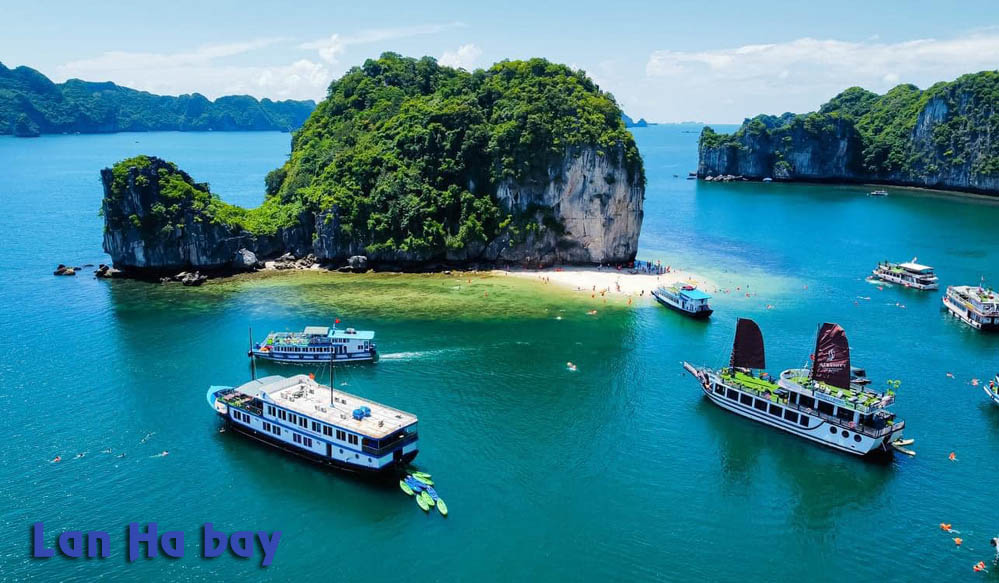
Cruise Lan Ha Bay - The 48th session of the World Heritage Committee of the United Nations Educational, Scientific and Cultural Organization (UNESCO) is currently taking place in Busan (South Korea), outlining many solutions related to the protection of the Halong Bay - Cat Ba Archipelago World Natural Heritage site.


Accordingly, after UNESCO inscribed Halong Bay - Cat Ba Archipelago as a World Natural Heritage site in 2023, Hai Phong and Quang Ninh have gradually built a coordination mechanism to uniformly manage the heritage space.

Quang Ninh and Hai Phong are finalizing plans for managing world heritage sites, regulations for heritage protection, and coordination mechanisms for managing tourist boats, environmental protection, data sharing, scientific research, and controlling capacity at tourist sites. These are also the contents recommended by UNESCO to ensure the integrity and sustainable development of the heritage.

Previously, on April, the regulations for coordinating the management of tourist boats in the World Natural Heritage site of Halong Bay - Cat Ba Archipelago were officially implemented. Hai Phong City has oriented its development towards conservation while exploiting the values ??of the heritage site appropriately. From the end of April, Quang Ninh and Hai Phong officially launched a sea tourism route connecting Halong Bay and Lan Ha Bay, linked with four common routes including VHL3, VHL4, VHL5, and VHL6.

The introduction of interconnected tour routes provides tourists with more options, extends their length of stay, and distributes visitor flow more evenly, reducing pressure on crowded areas.

In just the first three months of operation, the interconnected tour routes served over 4,500 visitors. Once fully operational, the "Two Destinations - One Journey" model is expected to welcome approximately 5,000-6,000 visitors daily with more than 50 regularly operating overnight boats, creating a driving force for the development of both Hai Phong and Quang Ninh.

In addition, Hai Phong is promoting the application of technology in management through electronic ticketing, ship tracking, marine environmental monitoring, and gradually building a shared database with Quang Ninh province.

Strengthening coordination between Hai Phong and Quang Ninh will not only fulfill commitments to UNESCO but also create a foundation for developing a heritage economy and building high-quality eco-tourism, resort, and island tourism centers.

When the government, businesses, and communities work together to preserve it, the Halong Bay - Cat Ba Archipelago World Natural Heritage site will continue to enhance its value, affirming its position as a leading tourist destination in Vietnam and the region.

Source: https://cruiselanhabay.com/news/quang-ninh-and-hai-phong-pioneer-interconnected-tour-routes/

Guide to Thung Nai - A Peaceful Escape to Hoa Binh reservoir

Vietnam cheap tour - The picturesque landscapes of Northwest Vietnam are known for famous tourist destinations such as Sapa, Ha Giang, Dien Bien, and Lai Chau, with images of terraced rice fields hidden in the mist of mountain passes or the echoing songs and flute melodies of ethnic minorities during festivals. However, few people know about another place in Northwest Vietnam that also possesses a poetic and romantic beauty, with clear blue skies and vast bodies of water that make you want to immerse yourself in the expansive nature. That place is Thung Nai scenic area.


The name Thung Nai (Deer Valley) might initially evoke images of a remote, secluded place, but in reality, it 's only about 100 km from Hanoi and less than 25 km from the center of Hoa Binh City. Thung Nai is a beautiful scenic spot with picturesque mountains and rivers, one of the most charming in the heart of the Da River reservoir. It's called Thung Nai because in the past, many deer lived in this valley. Every day, herds of deer frolicked and grazed on the mountain slopes and hillsides, thus giving rise to the name Thung Nai (meaning "valley of deer"). Today, although there are no more deer here, the locals still cannot forget the captivating beauty of the natural scenery from that time.

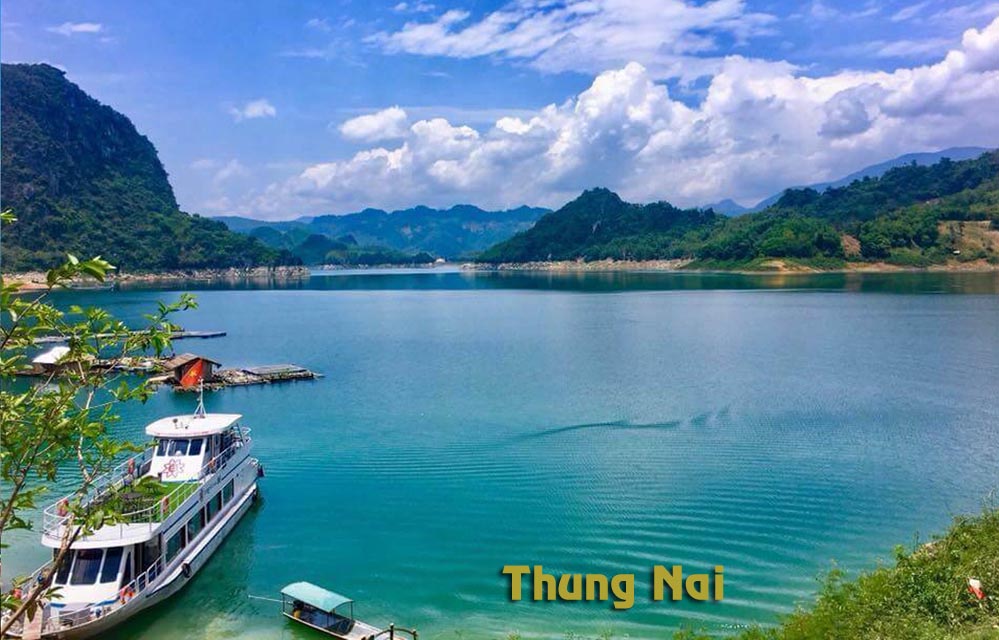
After the Hoa Binh hydroelectric dam came into operation, the Da River flooded the valleys, transforming this area into a stunning freshwater "Ha Long Bay", where the inhabitants are mainly Muong people and the Muong villages remain largely unspoiled by urbanization.

The natural scenery of Thung Nai is still quite pristine but stunning, with fresh air. The most beautiful sight is the lake itself. The vast lake is surrounded by mountain ranges of various shapes, its emerald green water reflecting the white clouds in the blue sky. Hundreds of large and small "islands"-mountains and hills submerged by the damming of the Da River for the Hoa Binh hydroelectric power plant -rise above the lake, creating a miniature Ha Long Bay in the highlands of Hoa Binh.

In Thung Nai, one can easily spot small islands rising from the water, babbling streams, scattered stilt houses and tiny boats, and the rhythmic sound of oars from the locals. On rainy days, the lake's surface is a reddish hue from the silt. On sunny days, the lake's clear blue waters reflect the mountains and sky. A must-see at the Thac Bo floating market in Thung Nai. The market only meets in the morning and closes quite early, around 8 a.m., when the crowds thin out. The busiest time is the Sunday morning market, attracting numerous trading boats from the surrounding area.

The Thac Bo floating market is held on weekends and Sunday mornings.

After visiting the floating market, tourists will head to Song village to visit the famous and sacred Thac Bo Temple. The temple is about a 20-minute boat ride from Binh Thanh port. Legend says that two women, one Muong and one Dao, helped King Le Thai To and his army provide supplies and boats, navigating hundreds of treacherous rapids to quell the rebellion at Deo Cat Han in 1431. After their deaths, the king ordered the construction of a temple to commemorate their contributions. The old temple is now submerged dozens of meters under the water of the hydroelectric reservoir. Today, the temple is always bustling with pilgrims coming to worship and participate in spirit medium rituals. Local people regularly offer incense and pray for the two women's blessings for their lives navigating the Da River. To this day, this custom continues, and many tourists and locals alike come to light incense, offer prayers, and make offerings at the temple.

Located a 10-minute boat ride from the Lady Goddess Temple, visitors can reach Thac Bo Cave, a national heritage site since 2008. If the water level is high, boats can be taken deep into the cave for sightseeing. If the water is low, visitors can stroll through the cave, walking on bamboo bridges to explore its beauty. Deep within the cave, stretching over 100 meters, lies a multitude of strangely shaped stalactites. Tapping them produces various sounds, which the local Muong people believe are as beautiful as the sounds of their gongs and drums.

From Thac Bo Temple, traveling by boat upstream towards Son La, visitors can visit Ngoi Hoa Lake or explore the villages of the Muong and Dao ethnic groups... Thung Nai offers many fascinating things for tourists to visit, discover, and relax. Particularly noteworthy are the unique culture of the Muong people and their unforgettable cuisine, including grilled Muong pork wrapped in mac mat leaves, grilled, smoked, or sour-cooked Da River fish, and the intoxicating rice wine that warms even the chilly highlands of Thung Nai.

Perhaps Thung Nai isn't suited for boisterous, noisy entertainment activities; instead, it offers moments of relaxation with family and friends, admiring the stunning natural scenery. Visiting Thung Nai is like returning to nature, enjoying the fresh air and savoring delicious local specialties of the Northwest mountains. Come to Thung Nai once to experience the gentle melodies and sounds of life, leaving behind the hustle and bustle of the outside world to find inner peace.

Source: https://cheapvietnamtour.com/blog/exploring-the-poetic-beauty-of-thung-nai.php

Friday, July 24, 2026

Phu Quy Encourages Plastic-Free Travel to Preserve Environment

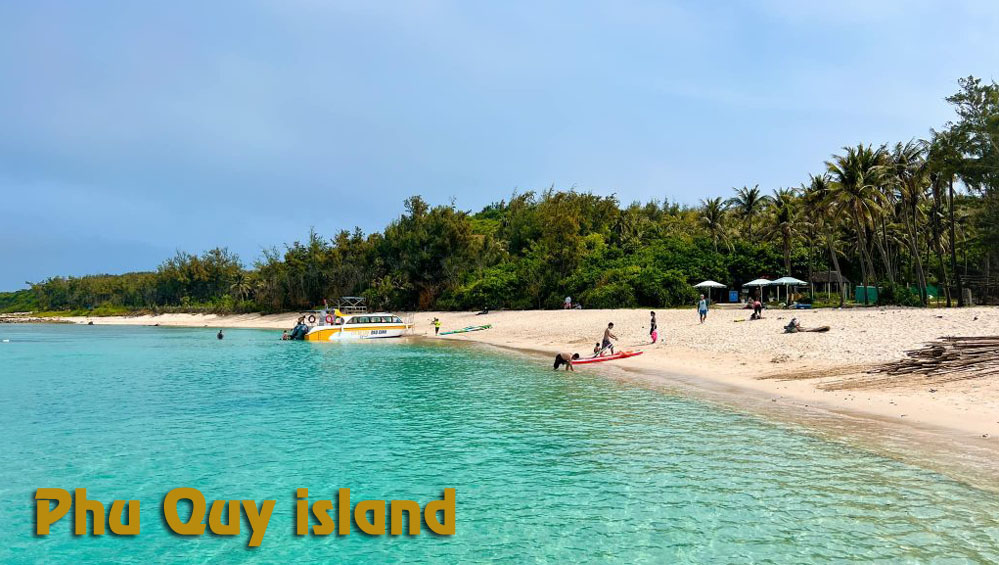
Package Vietnam Tours - Located more than 56 nautical miles from the mainland, Phu Quy Special Economic Zone retains its pristine beauty with its blue sea and peaceful island life. For the locals, the environment is not only a valuable asset but also the foundation for sustainable tourism development. Therefore, preserving the greenery of this place is becoming a shared responsibility of the government, businesses, residents, and visitors.

With a natural area of approximately 18 km2 and a population of over 32,000, Phu Quy Island is blessed with a rich marine ecosystem, many beautiful scenic spots, and unique cultural values of its island communities. This forms the foundation for the locality to orient its development towards green tourism, linking economic growth with the conservation of natural resources. In recent years, along with investing in tourism infrastructure development, the Phu Quy Special Economic Zone has identified environmental protection as a prerequisite for sustainable development. Many activities such as beach cleaning, garbage collection, and campaigns to reduce plastic waste are regularly organized, gradually fostering environmental awareness among the community and tourists.

One of the highlights is the campaign "No plastic waste on the island". According to the Chairman of the Lam Dong Provincial Tourism Association, to date, 12 businesses in the accommodation, food and beverage, speedboat, and tourism sectors have signed a commitment to minimize the use of single-use plastic products, replacing them with environmentally friendly materials such as paper cups, glass bottles, paper bags, cloth bags, and reusable products. These small changes are contributing to the formation of a green tourism ecosystem, aiming for sustainable development in the special economic zone.

In response to the program, Superdong Phu Quy High-Speed Ferry Company is committed to reducing the use of single-use plastics, increasing reuse and recycling, and encouraging passengers to join hands in protecting the environment right from their journey to the island. Tourists are also actively participating with Phu Quy in preserving the landscape. Ms Dao (a tourist from Ho Chi Minh City ) said that the pristine beauty of the island is the reason she chose this destination. Not bringing plastic waste to the island is not only complying with regulations but also contributing to protecting the beauty of Phu Quy for future generations of tourists.

According to the Chairman of the People's Committee of Phu Quy Special Economic Zone, each plastic bag or bottle left behind in the special economic zone can last for decades. But if everyone picks up a piece of trash, plants a tree, or reminds each other to maintain environmental hygiene, Phu Quy will become greener every day. That is also a meaningful gift for future generations. From the beginning of April 2026 until now, the "Effective People's Mobilization" model campaign team of the Vietnam Fatherland Front Committee of Phu Quy Special Economic Zone has visited each household to propagate and mobilize the "No Plastic Waste" movement. Many households have committed to reducing the use of plastic bags, sorting waste, and maintaining the landscape of their residential areas, contributing to building the image of a clean, beautiful, and friendly island.

Building a green island brand.

Environmental protection efforts are laying the foundation for Phu Quy to build a green tourism brand. By 2026, the locality aims to welcome approximately 173,000 visitors, requiring tourism development to go hand in hand with environmental protection and sustainable resource use. Local authorities are coordinating with businesses to improve service quality, ensure visitor safety, and enhance hygiene and maintain the landscape at tourist attractions according to the criteria of "green, clean, and beautiful". The Resolution of the Lam Dong Provincial Party Congress for the 2025-2030 term identifies marine economic development as one of the strategic directions, with Phu Quy being a key focus.

Amidst the vast ocean, the verdant landscape of Phu Quy Island not only creates a unique beauty but also serves as a foundation for sustainable development. Preserving this greenery today is also about building the tourism brand of tomorrow, aiming for the image of a friendly, pristine, and memorable destination.

Source: https://packagevietnamtours.com/vietnam_news/phu-quy-island-chooses-green-growth-for-its-tourism-brand.asp

A Close-Up Sail Through Coastal Urban and Natural Landscapes

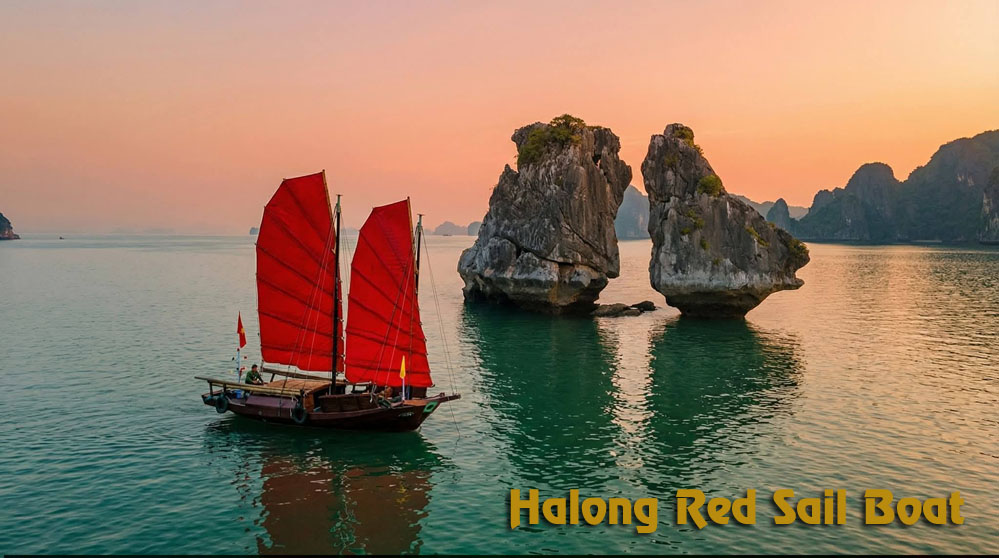
Bai Tu Long Bay cruise - In the heart of Halong Bay, vibrant red sails carry tourists from the docks for a one-hour journey along the bay's shoreline. The leisurely pace opens up an intimate, relaxing perspective, imbued with the rich maritime culture.


Launched to serve tourists from the end of June 2026, the Halong Bay three-walled boat is a new tourism product jointly developed by Quang Ninh Waterway Passenger Transport Company. Initially, the fleet consists of 6 boats, each accommodating a maximum of 12 passengers and 2 crew members. This small size creates a private and quiet atmosphere, suitable for families, groups of friends, or tourists seeking a relaxing experience after exploring the city.

The allure of the journey thus begins with the three-walled boat itself: The hull is constructed from three main planks, including a bottom plank and two side planks; the boat has two masts with distinctive bat-wing-shaped sails, long associated with the fishing and transportation activities of the inhabitants of the Bach Dang estuary.

More than just a means of transportation, each three-walled boat tells the story of the long-standing boat-building craft and the creativity of the coastal inhabitants. These boats, restored to their original form at the workshop of People's Artisan Le Duc Chan (Lien Hoa ward), have been modified with some adjustments to meet safety requirements and serve tourists. Their vibrant red sails stand out against the rocky mountains and the water, becoming a unique landmark in the bay.

Starting with the story of the boat, the journey continues, leading visitors to explore a familiar yet unfamiliar Halong Bay. Leaving the dock, the boat passes by the Bai Tho Bridge area, Vincom Halong shopping center, Quang Ninh Museum and Library, the Provincial Planning, Fair and Exhibition Center, Hon Gai beach, and then returns to the starting point. The route is approximately 12km long, just enough for passengers to experience the interesting transition between natural landscapes and coastal urban spaces.

In particular, when viewed from the water, the familiar structures of Hon Gai seem to take on a different appearance. The black architectural block of the Quang Ninh Museum stands out on the bay's edge; the Provincial Planning, Fair and Exhibition Center, with its curved shape resembling a dolphin, becomes more clearly visible. In the distance is the modern coastal urban area, while right beside the boat is the wide-open water, the sea breeze, and the characteristic rock formations of Halong Bay.

Not only does it change your perspective, the open space and close proximity to the water also allow visitors to better feel the rhythm of the waves and wind. When the sails are unfurled, the gentle lapping of water against the wooden hull creates a refreshing experience compared to sitting on large cruise ships. Therefore, the trip also becomes an ideal time to take photos, admire the city from the sea, or simply escape the hustle and bustle of life on shore.

To enhance the experience beyond mere sightseeing, the product incorporates explanatory QR codes, allowing visitors to learn about the history of the three-walled boats, the culture of the coastal inhabitants, and the points of interest along the journey. The product is also designed to introduce fishing village cuisine, folk singing, and other relevant cultural content, contributing to a recreation of the life of the fishing community in Halong. As a result, the short tour gains added cultural depth, bringing visitors closer to local values. 

According to the schedule, the boats operate daily from 8 am to 5 pm, with each trip lasting approximately 60 minutes. The early morning hours are suitable for those who want to enjoy the cool air, while the late afternoon trip usually has beautiful light, perfect for taking photos with the sails and the city skyline.

For a smooth trip, visitors should contact the operator in advance to check departure times, especially on weekends or days with changeable weather. Visitors should also arrive at the pier early before departure, wear comfortable shoes, light clothing, and avoid bringing items that could easily fall into the water. The three-walled boats offer a short, close-to-shore journey that is unique and rich in character, contributing to a renewed experience and evoking memories of Halong Bay's maritime culture.

Source: https://baitulongtours.com/news/experience-halong-coastal-culture-on-traditional-red-sail-boat.asp