Wednesday, September 23, 2026

Hanoi-Thai Nguyen Railway Opens New Opportunities for Tea Tourism

Tailor-made Vietnam tours - Developing tourism via railway on the Hanoi-Thai Nguyen route is opening up new connectivity opportunities for the tea-growing region. This idea has been researched and tested for many years and is now being concretized through a cooperation program for the period 2026-2030.
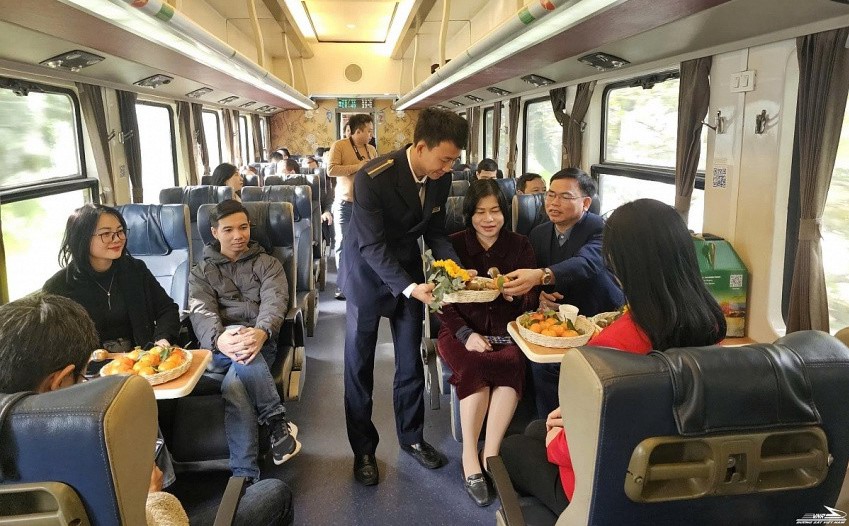

The 2026 Thai Nguyen International Tea Festival is an opportunity for this product to enter practical exploitation, linking the railway route with tea culture, heritage, and destinations of the province.

The development of the Hanoi -Thai Nguyen railway line for tourism purposes has been under study since the end of 2024. The province is coordinating with the railway industry to survey models, conduct trial train operations, and develop exploitation plans linked to tea culture.

The train journey on December 28, 2024, and the "Spring Journey - Returning to the Land of Tea" program in March 2025 are concrete test steps. Through these, the plan for organizing tours, promoting tea culture, and connecting destinations will continue to be refined.

On September 16, 2026, the People's Committee of Thai Nguyen province and the Vietnam National Railway Corporation signed a Memorandum of Understanding on cooperation in developing railway tourism products between Hanoi and Thai Nguyen for the period 2026-2030.

Both sides agreed to coordinate in finalizing the plan for developing tourist boats. The planned route will pass through Gia Lam, Dong Anh, Pho Yen, Luu Xa, and connect with tourist areas and attractions in the province.

The cooperation program aims to develop integrated railway tourism products, incorporating cultural, artistic, culinary, and tea-drinking activities on trains; introducing OCOP products and specialties at train stations and destinations; and connecting transportation, sightseeing, experiences, and accommodation services.

Luu Xa Station is envisioned as a visitor reception point, a cultural space, and a gateway connecting to the province's destination system. Tea culture is identified as a recurring theme, creating a unique mark for the Hanoi - Thai Nguyen journey.

The 2026 Thai Nguyen International Tea Festival provides an opportunity for this idea to be put into practice. The "Heritage Train", planned to operate on the Hanoi - Thai Nguyen route and vice versa, will contribute to promoting the Festival, tea culture, and distinctive tourism products.

After a period of research and testing, this is the opportunity for the product to directly reach tourists and be validated through practical use.

For railway tourism to be effective, transportation, sightseeing, experiences, accommodation, food, and guided tours need to be integrated into a unified itinerary.

Travel agencies and local service establishments play a crucial role in developing tours and integrating tea products and OCOP (One Commune One Product) into the experiential chain. Experience gained from the survey and trial operation since the end of 2024 serves as a basis for Thai Nguyen province and the railway industry to further refine the product and expand connections between the Hanoi market and the tea culture, heritage, landscapes, and unique values of the tea region.

The 2026 International Tea Festival - Thai Nguyen marks a milestone in the operation of the Hanoi - Thai Nguyen railway tourism product. Once established, this railway line will create additional connections in transportation , tourism, and services, helping to bring the unique values ??of the tea region closer to visitors. This will form a distinct tourism product, creating an attractive destination for exploring Thai Nguyen.

Source: https://tailormadevietnamholidays.com/travel_news/heritage-train-to-connect-hanoi-with-thai-nguyen-tea-culture.htm

Sapa promotes local products and cultural values through regional cuisine

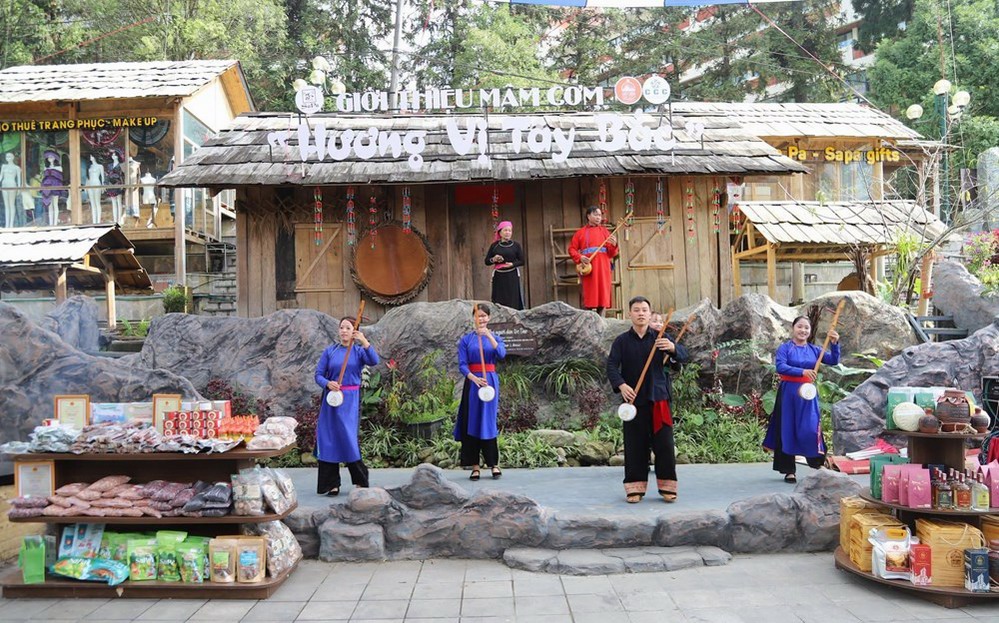
Sapa Tours - On September 20th, at the Sapa Ethnic Culture Park, the People's Committee of Sapa Ward, Lao Cai Province, organized a program to introduce "A Meal with the Flavors of the Northwest", contributing to the promotion of agricultural products, local specialties, and the cultural and culinary values of the highlands.

The program included participation from units from Sapa ward and several localities in Lao Cai province. Representatives from businesses, cooperatives, and production and trading establishments introduced products associated with the natural conditions, production practices, and lives of the ethnic minority communities.

The "Taste of Northwest Vietnam" space helps delegates, locals, and tourists better understand the unique characteristics of highland cuisine. Each product not only satisfies the desire for enjoyment but also reflects the source of ingredients, processing methods, and cultural values preserved by the community in their daily lives.

Within the framework of the program, the Organizing Committee awarded OCOP certificates to units whose products were recognized. This is an acknowledgment of the efforts to improve production processes, enhance quality, value, and competitiveness of local specialty products.

Being recognized under the OCOP program creates more opportunities for products to build brands, expand markets, and reach consumers. The program also opens up opportunities for businesses, cooperatives, and production facilities to promote their products, connect with consumers, and find partners.

With its advantage as a popular tourist destination, Sapa has many opportunities to integrate its cuisine, agricultural products, and OCOP (One Commune One Product) products into tourists' travel experiences. The connection between agricultural production, culinary culture, and tourism contributes to enhancing product value and creating additional livelihoods for the local people.

"The Taste of Northwest Vietnam" meal not only honors the local produce and culinary culture of the highlands but also expands the scope for promoting and spreading the image of Sapa, contributing to enriching the local tourism products.

Source: https://sapaadventure.com/traveller_reviews/sapa-celebrates-the-flavors-of-northwest-vietnam.html

Sunday, September 20, 2026

Ho Chi Minh city expands tourism space with diverse new experiences

Saigon Tours - Not only maintaining its position as the "leading tourism hub of the South". Ho Chi Minh City is gradually positioning itself as a dynamic destination with rich, multi-layered experiences, attracting both international and domestic tourists in the new normal context of the tourism industry after the administrative boundary merger. With a series of new tourism products, continuous promotional programs, and a long-term development strategy, Ho Chi Minh City's tourism is expanding its development space while contributing to boosting the city's socio-economic growth.

Tourism in Ho Chi Minh City is experiencing impressive growth.

In 2025, Ho Chi Minh City's tourism sector continued its positive growth momentum with 8.56 million international visitors and approximately 45.6 million domestic visitors. Total tourism revenue is estimated at 279,000 billion VND, accounting for nearly one-third of the city's total revenue and achieving 101% of the set plan. Based on these results, in 2026, Ho Chi Minh City's tourism industry aims to reach 11 million international visitors and 50 million domestic visitors.

These figures not only clearly demonstrate the strong recovery of Ho Chi Minh City's tourism industry after years of being severely affected by the COVID-19 pandemic, but also show the increasing attractiveness of this destination on the international tourism map.

According to the Ho Chi Minh City Department of Tourism, in the process of implementing the development orientation of Ho Chi Minh City to become a leading financial, commercial, service, and tourism center in Southeast Asia, expanding urban development space associated with improving the quality of infrastructure, tourism services, and building a smart tourism ecosystem is identified as one of the key tasks, contributing to ensuring sustainable growth and enhancing the competitiveness of the destination.

Ho Chi Minh City is not only recovering in terms of tourist numbers but is also actively innovating its tourism products and experiences. The tourism products being promoted include: MICE tourism (meetings, incentives, conferences, and exhibitions), leveraging the advantages of modern infrastructure and event centers; historical site tourism; waterway tourism on the Saigon River, connecting unique waterway routes; agricultural and community tourism in surrounding areas such as Hoc Mon, Cu Chi, Can Gio, and Long Son; night tourism; medical tourism; and culinary tourism… attracting both domestic and international tourists.

Notably, Ho Chi Minh City also focuses on developing inter-regional tourism routes with prominent destinations from neighboring localities after the merger (such as Ba Ria - Vung Tau, Binh Duong), creating a complete chain of experiences from dynamic urban areas to seaside resorts, green rural areas, and diverse ecosystems. According to the strategic direction of the tourism industry, this will be a competitive advantage in attracting international tourists in the new phase.

Speaking at the recent seminar "Ho Chi Minh City Tourism Development Space - Driving Force from Service Chain Linkages and Customer Experiences," Mr. Pham Huy Binh, Director of the Ho Chi Minh City Department of Tourism, affirmed that Ho Chi Minh City's tourism is rapidly transforming towards quality, sustainability, and multi-dimensional experiences. "We are not only focusing on the number of tourists but also on improving services, expanding into new markets, especially in Asia and Europe, aiming to make Ho Chi Minh City a leading destination in the region".

As Ho Chi Minh City enters a new phase of development, the city recognizes that tourism is not just a single economic sector, but an experiential ecosystem. By 2030, the city aims to become a smart tourism city, where local cultural identity is preserved and disseminated through the power of modern technology.

As Ho Chi Minh City becomes a large-scale integrated urban area, its tourism space expands, resources become richer, and opportunities for cooperation become more diverse. However, this also demands a broader vision and closer coordination. Therefore, the city's tourism industry is entering a new phase with a determination to develop products that reflect its unique identity, pioneer in digital transformation, and especially to build a professional culture - tourism ethics - and hospitality as core values.

Long-term strategy for continued breakthroughs in tourism.

Not content with its current achievements, Ho Chi Minh City's tourism industry has set a target for further expansion in 2026, aiming to welcome 61 million visitors, including 11 million international tourists and 50 million domestic tourists. Total tourism revenue is projected to reach 330,000 billion VND, affirming its role as the leading tourism hub in the country. To achieve this goal, the city is revising its tourism development plan until 2030, repositioning its vision, products, and tourism brand based on big data and the application of artificial intelligence in its operations.

The Ho Chi Minh City Department of Tourism is also working closely with domestic and international partners to develop unique tourism products that reflect the cultural and historical heritage of Southern Vietnam, while simultaneously connecting and developing a cross-regional tourism ecosystem.

Doan Thi Thanh Tra, Deputy General Director of Saigon Travel Service Company, commented that Ho Chi Minh City, upon expansion, should not only become a center for accommodation but also develop into a "super multi-experience tourism city." Accordingly, it is necessary to focus on unique products such as: combining urban culture - river tourism - beach resorts - traditional craft village experiences - eco-tourism in suburban areas; investing in the development of night-time tourism, food courts - night markets - performing arts, to attract spending from international tourists; focusing on river tourism and the "one city - two airports" product, leveraging aviation infrastructure to increase international tourist traffic…

According to Tra, one of the decisive factors for tourism to become a key economic sector is the application of technology and big data. Ho Chi Minh City needs to implement a smart tourism ecosystem integrating multiple platforms, including digital maps, service reviews, customer feedback, and online payment, ticketing, and promotion systems.

The reorientation of tourism development in Ho Chi Minh City, in the context of administrative boundary expansion, is a turning point for the city to make a strong breakthrough in this key service sector. With steadily increasing visitor numbers, diverse tourism products, and continuously improving management capacity, Ho Chi Minh City is asserting its position not only domestically but also on the international tourism map.

With a clear strategic vision and close coordination between management agencies, businesses, and the community, tourism in Ho Chi Minh City is projected to continue to be one of the important drivers of socio-economic growth in the city in the new era.

Source: https://saigontraveltour.com/sai-gon-travel-blog/transforming-ho-chi-minh-city-into-a-smart-tourism-hub/

Halong intensifies cleanup and plastic reduction efforts to protect heritage

Halong tours - Driven by the strong determination of local authorities and the collaborative efforts of the business community and tourists, environmental protection and plastic waste reduction initiatives in Halong Bay are yielding positive results, helping to preserve the landscape and environment of this heritage site.


Halong Bay, a World Natural Heritage site, is not only a source of pride for Quang Ninh but also an invaluable treasure for Vietnam and the world. To protect the bay's environment, Quang Ninh has issued and implemented various major policies in recent years to enhance heritage protection. These include relocating all floating fishing village residents to the mainland; prohibiting fishing within the heritage site's core zone; zoning aquaculture areas outside the heritage site; and improving the quality, safety, and operational efficiency of tourist vessels while reducing their overall numbers.

Notably, since September 1, 2019, the Management Board of Halong Bay – Yen Tu World Heritage Site has implemented the "Plastic-Free Halong Bay" program. The initiative encourages tourism service providers, travel agencies, and visitors to avoid using single-use plastic products while visiting the bay. Items such as plastic bottles, plastic bags, and plastic straws are gradually being replaced with suitable, eco-friendly alternatives.

At passenger ports, before boarding vessels to tour Halong Bay, visitors are advised against bringing or using single-use plastic products. Such reminders at ticket checkpoints encourage visitors to proactively adjust the items they carry, fostering a shared commitment to environmental preservation throughout their journey. Information regarding environmental protection is also disseminated via loudspeaker systems, signage, and visual materials at the port and tourist destinations.

Notably, on June 5 and 6, 2026, at the Halong International Cruise Port, authorities conducted an awareness campaign urging tourists not to bring plastic waste onto boats touring the bay, while also reminding boat owners to comply with regulations on limiting single-use plastic products. To help shift habits, authorities distributed non-woven fabric bags-as alternatives to plastic bags-to tourists boarding the sightseeing boats. Thanks to this proactive engagement, the majority of visitors responded enthusiastically, complying with the rules against bringing or using single-use plastic products while visiting the bay.

According to a report by the Management Board of the Halong Bay - Yen Tu World Heritage Site, 100% of businesses and households operating tourist boats and tourism services within the heritage site's core zone have signed a commitment to participate in the program. Single-use plastic waste resulting from tourism activities at sightseeing spots has been reduced by over 90%.

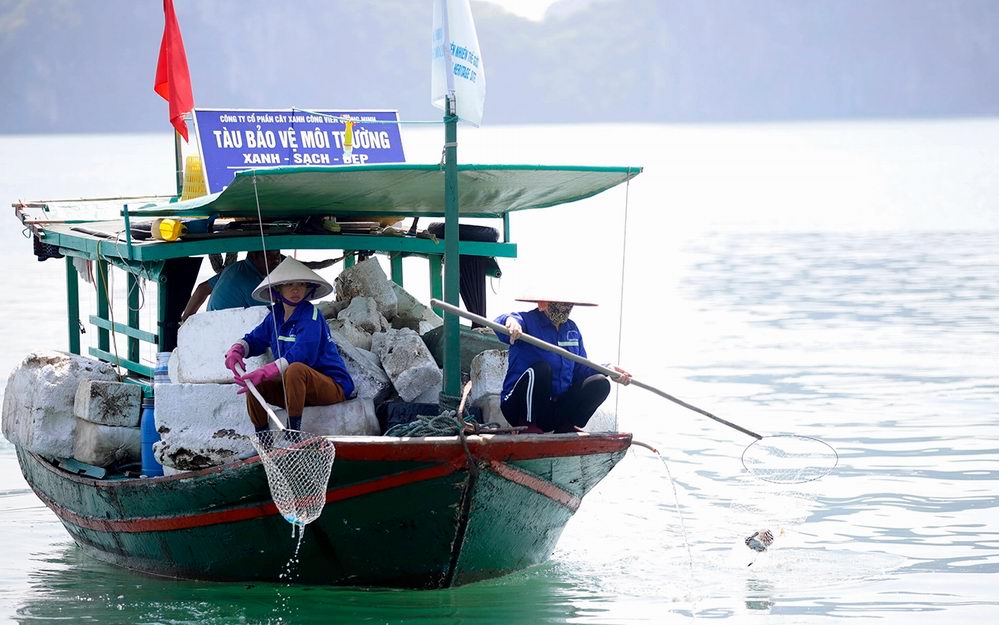
Authorities collecting floating waste on Halong Bay.

Beyond awareness-raising efforts, waste collection activities on the bay continue to draw active participation from various organizations and businesses. Since the beginning of the year, numerous cleanup campaigns have been organized in areas surrounding islands, at sightseeing spots, and in adjacent zones.

Notably, on May 23, the Youth Union of the Halong Bay - Yen Tu World Heritage Site Management Board collaborated with the Youth Union of Petrolimex Quang Ninh One Member Limited Liability Company to mobilize 30 people to clean up the Ang Du Island area, collecting approximately 20 cubic meters of waste. Subsequently, on May 28, the “Clean the Bay 2026” program-organized by Bhaya Cruises Co., Ltd. near the Ba Men Temple-attracted over 80 volunteers and resulted in the collection of more than 600 kg of various types of waste. On June 8, the Management Board of the Halong Bay - Yen Tu World Heritage Site collaborated with the Cat Ba Bay Management Board to collect over 20 cubic meters of waste from the areas of Hon Gom Giua and Hon Dam Nam, transporting it to the shore for proper disposal.

Alongside waste collection efforts in the bay, the replacement of polystyrene floats on floating structures is also proceeding. According to reports from the Halong Bay heritage management authority, 99% of the polystyrene floats on floating structures within the core zone have now been replaced with sustainable, eco-friendly materials.

Building on these achievements, the Halong Bay - Yen Tu World Heritage Site Management Board will continue to coordinate with relevant departments, agencies, and local authorities to control coastal waste sources and prevent waste from spreading into the bay. Waste sorting must be integrated with synchronized collection, transportation, and treatment processes. As reducing single-use plastics becomes a standard practice across cruise operations, service activities, and community life, the preservation of the Halong Bay environment will rest on a more sustainable foundation.

Source: https://halong-tour.com/travelnews/key-policies-and-community-efforts-preserving-halong-bay.php