Halong Bay Tours - Cai Chien Island belongs to Cai Chien commune, located approximately 330 km northeast of Hanoi. The island covers an area of 27 km2, with a predominantly hilly and mountainous terrain and primary forest. The coastal areas of the island have many rocky islets.
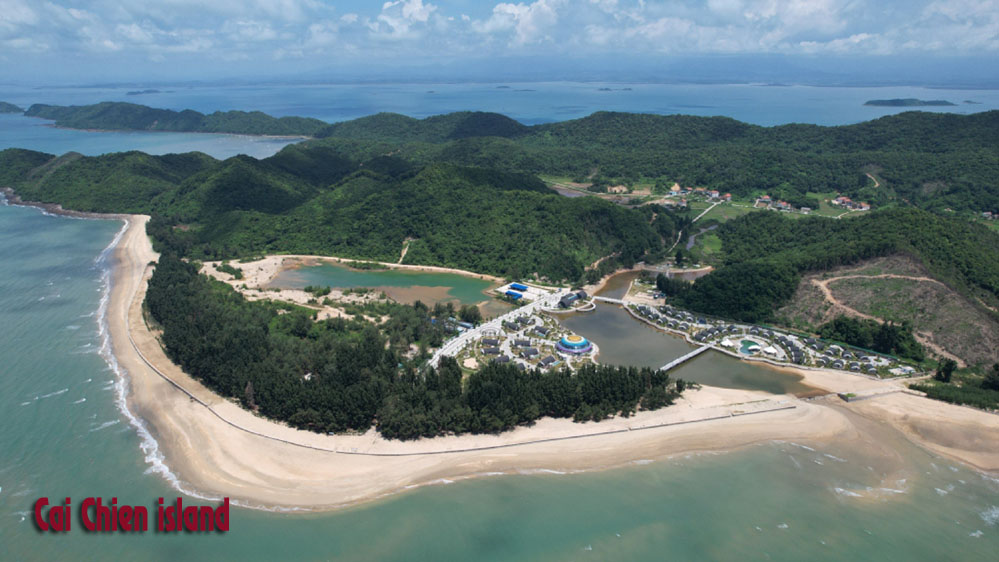
Compared to larger tourist islands in the region such as Co To or Quan Lan, Cai Chien is likened to a "gentle and quiet younger sibling". The island has about 150 households, fewer than 1,000 people, who mainly live by farming and fishing. Tourism has only begun to develop in recent years.
The island has few services, shops, entertainment activities, and famous check-in spots. Cai Chien is a natural destination, ideal for rest and relaxation, perfect for "slow living" travel.
Cai Chien doesn't have a bustling fish market or fishing village like many other coastal areas. Every morning, locals bring vegetables, meat, tofu, and other necessities from the mainland to sell to the islanders.
How to get there
From Hanoi and surrounding provinces, tourists can travel to Ghenh Vo pier (Quang Ha commune) by road via the Hanoi - Hai Phong (CT04) and Hai Phong - Mong Cai (CT06) expressways. The journey takes approximately 4 hours.
From provinces and cities in Central and Southern Vietnam, tourists can fly to Van Don (Quang Ninh) or Cat Bi (Hai Phong) airports. By train, tourists can get off at the nearest station in Hai Phong, then travel by road to Ghenh Vo ferry terminal.
From Ghenh Vo pier, there are two ways to get to the island: by speedboat or ferry. The ferry carries people and vehicles including motorbikes and cars with 4 to 29 seats.
The ferry ride takes about 45 minutes. The journey is longer, but the ride is smooth and offers scenic views. Taking a speedboat is faster, about 15 minutes, but can cause seasickness. The ferry ticket costs 40,000 VND per trip.
If traveling in a large group, tourists can book a private speedboat. A round-trip speedboat costs 3 million VND for about 20 people. If traveling in a small group or individually, tourists can wait to share a speedboat, at 100,000 VND per person.
Visitors can purchase tickets at the pier or contact homestays in advance. The earliest departure is around 6:30 AM.
Traveling on Cai Chien Island
Electric vehicles transport guests from the port to homestays and are also the main mode of transportation on the island. The price for electric vehicles is publicly listed, approximately 150,000 VND per vehicle from the port to the beaches. Renting a vehicle to explore the island on weekends costs 1 million VND per vehicle, and 800,000 VND per vehicle on weekdays (maximum 13 passengers).
Alternatively, tourists can rent motorbikes from locals for 250,000 VND per day or 150,000 VND per half day, or bring their own vehicles from the mainland to the island.
Most accommodations on the island are homestays and guesthouses such as Tuan Trung, Ngan Anh, Nhu Quynh, Moc, Sinh Hong, Tung Duong, Anh Hoan Wooden House, Hoang Cuong, Huong Truong, Phi Vung, Hoan Hang, and Dao Ngoc Retreat. Most of these are located near the beach. Room rates range from approximately 500,000 to 800,000 VND per night for a double room.
Hotels and resorts in Cai Chien island
Huan Khai Hotel, priced from 1 million to 1.5 million VND per night, and Dau Rong Resort, priced from 1.8 million to 3.6 million VND per night, are the most luxurious resorts on the island.
Attractions and activities in Cai Chien island
Natural beaches
Cai Chien 1 and Cai Chien 2 both feature natural golden sand with pebbles of varying sizes and colors. These beaches are quite steep, lack lifeguards, and local authorities advise against swimming. If the waves are moderate in the morning, visitors can swim. However, when the tide rises, the waves are large and the water is deep, so children should not swim and should wear life jackets for safety.
Cai Chien 2 is the most vibrant beach on the island, with many homestays. There are also drink stalls serving tourists. If you prefer a quieter and more unspoiled environment, you can go to Van Ca Beach or Vung Bau, about 3 km from the center of Cai Chien.
Dau Rong Beach
Located within the grounds of Dau Rong Resort, this artificial beach, filled with fine sand, is considered the longest and most beautiful beach on the island. The beach is flat and safe for adults, children, and even non-swimmers.
In the morning, visitors can venture about 150 meters from the shore, where the water is only waist-deep. In the afternoon, when the tide rises, visitors are only allowed to swim within the safety buoyed area designated by the resort. On the shore, there are lifeguard huts, shower and changing facilities, life jacket rentals, tables and chairs, or storage sheds.
Khe Dau Lake
Khe Dau Lake serves as a freshwater reservoir for the island's inhabitants. The lake is large, with clear blue water, surrounded by shady trees. Khe Dau is also a beautiful spot for photography if visitors don't mind the heat. Visitors should come here at sunset to admire the beautiful sunset.
Squid fishing - snail catching
Depending on the season and weather conditions, visitors can participate in squid fishing tours, regular fishing tours, or net fishing for clams and snails. Visitors can take their catch home. The homestay will also help guests prepare a variety of dishes from their catch. Prices are calculated per tour or based on the weight of the catch taken home. Each tour is usually for 5 or more people.
Take a check-in photo
Cua Dai Sand Bay (at the end of the island), Cai Chien pier, and the areas in front of homestays at Cai Chien 2 beach are popular spots for tourists to take photos and check in. Along the roads around the island and along the beaches, tourists can stop anywhere to take beautiful pictures.
Eating in Cai Chien island
Cai Chien doesn't have as many restaurants or cafes as other tourist destinations. Typically, visitors order food directly from their homestay. It's advisable to order in advance so the homestay owner can go shopping. Some homestays also accept non-resident guests. Local specialties include grilled catfish and bearded chicken, usually grilled or steamed.
In the morning, a few local houses open to sell vermicelli, pho, seafood rice noodles, mixed toppings, and a few small cafes and convenience stores to serve the basic needs of tourists. Suggested addresses: Bong Coffee, Ngoc Hoang Cafe, Ghenh Dun Cafe, and the bubble tea shop at Beach 2.
Note
The peak season in Cai Chien is from April to September. Tourists should book their accommodations at least two months in advance, especially on weekends. To avoid crowds, visitors should come to Cai Chien on weekdays.
Most roads on the island are unlit (except at intersections and the town center), the population is quite sparse, so tourists should be mindful when traveling at night.
Source: https://travelhalongbay.com/news/a-complete-travel-guide-to-cai-chien-island.html

No comments:
Post a Comment